Overview & Specs
The Case IH Farmall Compact 35C is an open-station compact tractor to evaluate when attachment changes and varied property chores matter as much as engine output. Its buying case is not simply that a C badge must be better than an A badge. It is whether the actual controls, hydraulic equipment and loader package make the owner’s recurring work easier to organise at a justified total cost.
For Canadian buyers, the distinction between this 35C and neighbouring C models is important. The current Canadian 35C page identifies a non-cab tractor. A cab shown elsewhere in a family brochure should not become an assumed feature of a 35C quotation. Start with the exact machine, then build the equipment plan around it.
On This Page
ToggleThe Canadian 35C at a glance
| Specification | Manufacturer information |
|---|---|
| Engine power | 35 hp |
| PTO power | 29.7 hp gear; 28 hp hydrostatic |
| Transmission | 12×12 mechanical shuttle or three-range HST |
| Operator station | Non-cab |
| Traction | MFD |
| Listed loader | L350A |
The source is the Canadian Farmall Compact 35C page, checked October 19, 2026. The manufacturer’s linked 2022 Farmall Compact brochure, CIH22041801, supports the same power and transmission entries. Its equipment table lists one standard rear remote, with two available, for the covered non-cab 35C. Verify installed equipment on a used tractor rather than treating the old table as an inventory.
Why attachment changes deserve their own buying decision
Consider an owner who alternates between mowing, light grading, garden work and loader chores. None of those jobs may occupy a full day, yet each can require a different setup. The tractor’s usefulness depends partly on how readily it can move from one task to the next. A machine selected only for its most demanding ten minutes may be inconvenient during the rest of the week.
Write a normal day’s sequence before comparing quotations. Include where the first implement is parked, which tool replaces it, which connections need to change and where the operator stands during the approved connection procedure. Note whether the work can be grouped to avoid repeated swaps. This often reveals a storage or equipment-planning improvement that a horsepower upgrade would not address.
The 35C is worth evaluating as a complete workflow package: tractor, loader, rear equipment, available controls and a practical parking arrangement. The objective is not to claim that it connects every implement faster. It is to test whether the proposed configuration removes specific inconveniences in the owner’s actual routine.
Understand what a rear remote contributes
A rear remote can provide control for an appropriately matched hydraulic function on an implement. It does not supply every possible function at once, and its presence does not prove the circuit is suitable for an unspecified continuous-flow tool. Identify what each attachment needs: adjustment, powered movement, return arrangement and the required control behaviour.
A rear blade with hydraulic adjustment and a loader grapple create different connection questions. Loader lift and curl controls do not automatically provide the grapple’s additional function. Similarly, the presence of hoses at the rear does not establish their condition, valve type or compatibility. Count the functions the operator must control and match them to the equipment actually included.
For a used 35C, have the circuit and couplers assessed during the inspection. For a new package, require a written equipment list. A vague “hydraulics included” line is much less useful than identifying the function, connection and compatible implement. Missing controls are easier to resolve before the tractor is delivered.
PTO work still begins with the correct transmission rating
The 35C’s gear and HST versions have different stated PTO outputs. An implement requirement must be compared with the version being purchased, not simply with the 35-hp engine headline. Where the tool specifies both minimum and maximum tractor requirements, preserve both in the selection process.
Do not interpret a small numerical margin as proof of satisfactory performance in every condition. Material, work rate and the intended finish remain relevant after the basic power screen is passed. A mower operating in maintained grass is not being asked to do the same job as one confronting heavier, irregular growth. Describe the duty honestly before choosing the attachment.
The PTO horsepower guide helps distinguish engine rating, shaft output and shaft speed. Those terms should also remain separate when comparing the 35C with another brand or with a similarly named Farmall.
Mechanical shuttle or hydrostatic for a mixed routine?
A mechanical-shuttle demonstration should include selecting an appropriate working ratio and following the prescribed direction-change procedure. The relevant question is how comfortably the driver performs the recurring sequence, not whether the transmission is described as traditional or simple. Do not infer shift-on-the-move permission from the shuttle name.
For HST, assess controlled approaches, small position changes and repeated reversals. Include the operator’s normal footwear and seating position. If the tractor is shared, have each regular driver try the arrangement. A control layout that one person likes can be awkward for another.
A mixed workload does not necessarily produce one obvious winner. Record where each version helps or complicates the routine, then weigh those observations against how often the task occurs. Aglist’s transmission comparison provides a broader framework without promising a universal reliability or fuel-consumption advantage.
Rear-hitch compatibility includes the parked and raised positions
The dated brochure identifies a Category 1 hitch for this model. That is the beginning of the connection check. The implement must also fit the tractor’s documented carrying capability, clearance and configuration requirements. A tool can connect at the pins while still being unsuitable as a complete working combination.
Inspect the attachment in its practical positions: parked for connection, working at its intended setting and raised within its permitted movement. Check the required driveline arrangement separately. If a quick hitch is added, its effect on the geometry must be included; do not assume a PTO shaft previously fitted for direct connection remains correct.
The quick-hitch guide is especially relevant for a buyer trying to reduce changeover effort. Convenience is valuable when the complete connection remains suitable. It is not a reason to skip the checks that a category label cannot answer.
The L350A: compare tasks rather than headline numbers
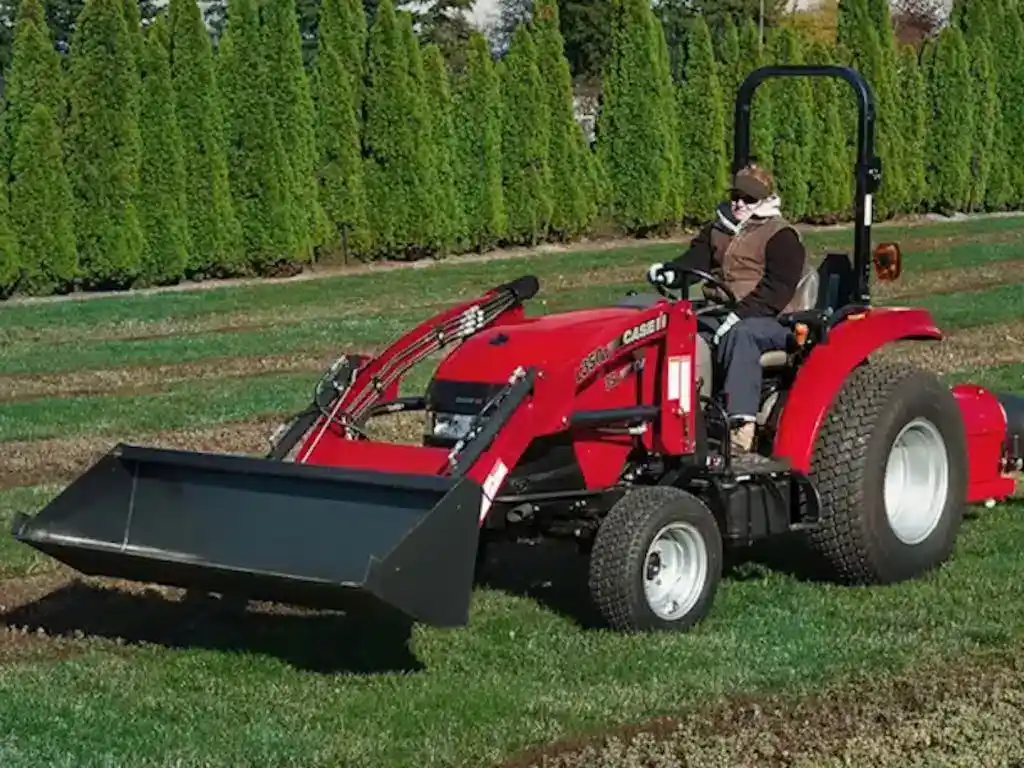
The Canadian page pairs the 35C with the L350A. A buyer considering an A-series alternative should compare the complete documented loader packages, rather than assuming equal engine power means equal handling capability. Loader identity and attachment geometry create their own assessment.
For bucket work, identify the receiving height and where material must land. For forks, identify the entire load and its centre relative to the attachment. The required tractor setup and the relevant load information must be preserved. A maximum published figure without its measurement point is insufficient for approving an actual pallet.
Include the route between the pile and receiver. Tight turns, access and the operator’s view can matter more than the speed of an isolated lift. A permitted demonstration should reproduce the important parts of the task with appropriate equipment. Use the loader capacity explanation to understand why breakout force and payload are not interchangeable.
A changeover example that can change the purchase priorities
Imagine, purely for planning, that the owner makes 30 attachment changes in a season. An improved approved connection and storage arrangement is assumed to reduce each change by eight minutes. That equals 240 minutes, or four hours, over the season. These are invented inputs, not measured 35C results or a promise associated with a particular hitch.
The calculation is useful because it puts the convenience in proportion. Four hours may be worthwhile, but it should be compared with the actual equipment cost and the frustration removed. If changes happen only ten times, the same assumed improvement saves 80 minutes. Buying equipment for a routine that rarely occurs can be less valuable than equipping the daily task properly.
Also consider whether the arrangement eliminates lifting, awkward alignment or a recurring setup problem. Not every improvement needs to be justified by an hourly wage. Describe the benefit honestly instead of inventing productivity savings to support a preferred accessory.
Seasonal work and the open operator station
For flexible garden and maintenance sessions, the open 35C may fit well. The decision changes if essential work regularly occurs in conditions the operator finds difficult. List those sessions separately rather than averaging them into total annual hours. A handful of unavoidable winter mornings can deserve more attention than many optional summer hours.
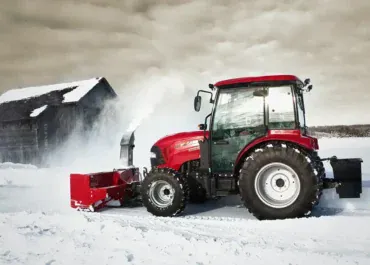
For a blower, confirm the complete drive, mounting and control arrangement and assess the viewing posture. For a blade or bucket, plan where accumulated snow will go. The tractor’s power does not create storage space for snow or solve a discharge conflict. Those are site-planning questions that should be answered before ordering the attachment.
If a factory cab is essential, look at the appropriate identified model instead of assuming the 35C includes the enclosure advertised elsewhere in the series. The operator-station comparison helps assess enclosure around tasks, access and actual weather exposure.
Storage, transport and ownership preparation
Measure the complete tractor in its approved operating and storage configurations. Include the bucket or other front tool, tyres and high points. Check space for attachment parking and normal service access. A shed that barely contains the tractor may still make every tool change unnecessarily difficult.
When hauling is part of ownership, use the complete load rather than tractor-only brochure mass. Include loader, implements, ballast and other transported equipment, then assess the hauling combination against its own requirements. Keep the transport plan separate from a rough comparison of compact-tractor sizes.
Service planning should use the manual for the actual machine. Identify required fluids, intervals and any warning history through proper records and inspection. Do not transplant an emissions or maintenance procedure from another Farmall because the badge or engine horsepower looks similar.
Alternatives and used-machine checks
The 35A comparison is about the completed equipment package, not an assumed superiority of the C designation. An A package can be sufficient when its documented equipment meets every requirement. A C package can justify consideration when the relevant controls and loader arrangement better suit the routine. Obtain equivalent quotes before deciding which difference is worth paying for.
Cross-brand candidates such as the KIOTI CK3520 deserve the same function-by-function comparison. Do not equate model numbers with identical power at the implement or identical standard equipment. Check the offered transmission and station first.
For a used 35C, inspect identification, loader mounts, linkage, couplers, controls and service evidence with qualified help. Evaluate included implements independently. Price any missing valve, worn tool or required repair before comparing the final cost with a ready-to-work alternative. These checks are not assertions of model-specific failure patterns.
Frequently asked questions
Is the Canadian 35C a cab tractor?
The cited current page specifies non-cab. Do not transfer a neighbouring model’s station or a family photograph into the 35C equipment list.
Does one rear remote operate every hydraulic attachment?
No. Match the number and nature of required functions, controls and connections to the exact implement.
Does the C badge guarantee faster attachment changes?
No. The actual hitch, connections, parked equipment and operator routine determine the result. Demonstrate the proposed combination.
Can a quick hitch be added without checking the PTO shaft?
No. The changed geometry requires a complete compatibility assessment, including the driveline where fitted.
Who should put the 35C on a shortlist?
A buyer whose essential tools fit the documented power and carrying requirements, whose seasonal work suits an open station, and whose varied chores benefit from the complete equipment package being offered.
Share your experience
Help other Canadian buyers — leave a quick review for the
Case IH Farmall Compact 35C
There are no reviews yet. Be the first one to write one.