Overview & Specs
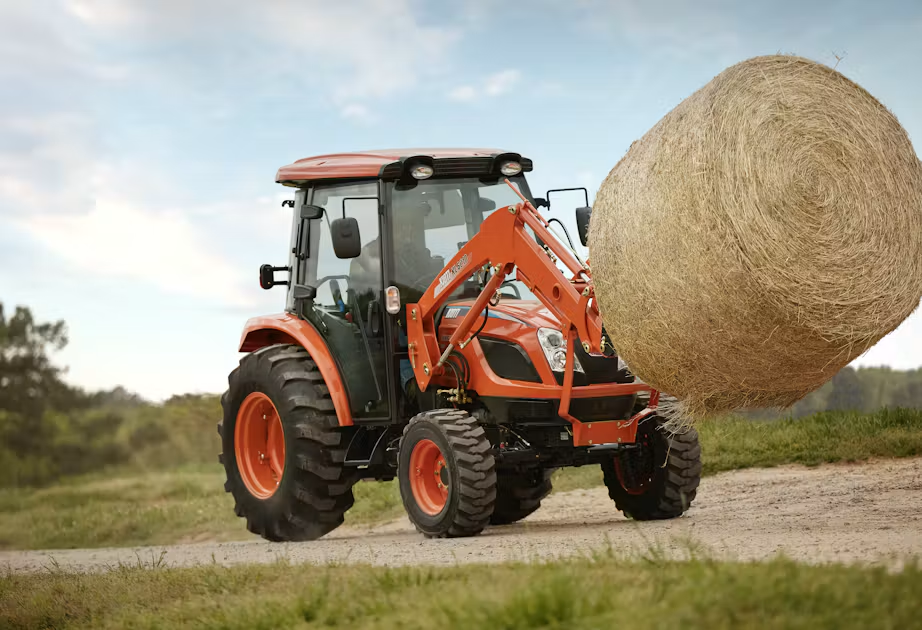
The KIOTI NX4510CH is a cab-equipped hydrostatic tractor for buyers who value controlled low-speed movement and an enclosed working environment more than a large engine number alone. Its 45 gross engine horsepower can obscure the more relevant figure for driven implements: this CH configuration is listed at 33.9 PTO hp. That distinction should be settled before selecting a snowblower, cutter or other power-demanding tool.
For a Canadian acreage, the strongest case for this tractor is a recurring workload where cab comfort, visibility and hydrostatic control make the working day more manageable. The weakest buying method is to assume that every NX4510 version has the same transmission, PTO output or operating weight.
On This Page
ToggleIdentify the CH configuration before comparing specifications
KIOTI’s Canadian NX4510CH page identifies the cab hydrostatic model. The manufacturer-linked NX brochure, dated July 2018, separates the NX4510, NX4510C, NX4510H and NX4510CH columns. It is particularly useful for avoiding specification transfers between manual and HST variants.
The online page contains a gear-count entry inconsistent with its hydrostatic identification. The brochure explicitly shows three-range HST for the CH version, which is the specification used here. A used purchase still needs the actual identification and applicable serial-specific documentation; an old brochure is not evidence of current dealer inventory or a particular machine’s fitted options.
| Item | NX4510CH reference | Practical implication |
|---|---|---|
| Gross engine power | 45 hp | Different from available PTO output |
| PTO power | 33.9 hp | Use the CH figure for implement screening |
| Transmission | Three-range hydrostatic | Variable travel within the selected range |
| Rear PTO | Independent, 540 rpm | Confirm the implement speed requirement |
| Rear hitch | Category I | Geometry and driveline checks remain necessary |
| Brochure hitch lift | 3,177 lb at 24 inches aft of hitch | Preserve the stated measurement location |
| Cab height | 94.1 inches | Verify equipped storage clearance |
| Weight with agricultural tyres | 4,309 lb | Not the complete loader-and-ballast transport weight |
A cab decision starts with the hours spent inside it
Weather protection matters most when it changes whether a recurring job is practical to complete comfortably. Consider an exposed snow-clearing route, dusty mowing or a long day with frequent weather changes. Then consider the opposite situation: short tasks involving repeated entry and exit around buildings.
A cab can add value in the first group while creating different access and visibility considerations in the second. Judge the actual doors, steps, handholds, seat adjustment and sightlines. The ability to get into the tractor easily while wearing normal work clothing deserves as much attention as a list of convenience features.
For winter work, assess visibility through the front and rear glass and how the fitted climate-control equipment maintains it. A comfortable temperature is only part of the requirement. The operator must also see the attachment and surroundings from the normal driving position.
The manufacturer’s brochure distinguishes cab equipment such as air conditioning and defrost from other optional items. Inspect the exact installed equipment rather than assuming that every cab advertised online includes the same wipers, mirrors or accessories. Aglist’s cab ownership guide develops this comparison in more detail.
HST controls: understand the function before valuing the feature
Three-range HST provides variable travel speed within the selected range. For careful loader positioning, this can reduce the need to choose a fixed gear for each movement. It also allows ground speed to be adjusted when a driven implement encounters changing material, while the required PTO operating speed is maintained.
That does not make range selection irrelevant. A demonstration should show suitable working ranges and the prescribed procedure for changing them. Assess the machine doing a representative task, not just accelerating across an open lot.
The NX brochure describes HST anti-stall and cruise functions. Their purposes differ: anti-stall responds to a momentary overload, while cruise helps maintain a selected travel speed. Neither is a licence to exceed implement limits or leave a task unattended. Ask for each control to be demonstrated separately so that its effect is understandable.
Likewise, an engine-speed or PTO-related setting is not interchangeable with ground-speed cruise. A buyer should be able to explain which variable each control holds and what happens when load changes. Marketing names are less useful than that practical understanding.
For shared operation, check pedal comfort for every regular driver. A control arrangement that suits one person’s seating position can be tiring for another. Aglist’s transmission guide helps compare that workload with a manual or shuttle alternative.
Match attachments to 33.9 PTO hp, not the 45 hp label
The manual NX4510 columns in the brochure have a different PTO figure from the HST versions. Importing the manual figure into a CH comparison can make an unsuitable attachment appear acceptable on paper. Retain the full suffix whenever specifications are recorded.
Suppose an implement’s documentation specifies a minimum of 35 PTO hp. On the stated figures, the NX4510CH’s 33.9 hp does not establish that the minimum is met. The engine rating cannot be used to change the result. This example is a screening exercise, not a prediction of performance in a particular crop.
After the power requirement, check speed, mounting, driveline movement and carrying conditions. A mower that satisfies the horsepower screen may still create a dimensional or clearance problem. A blower adds questions about chute controls and the working relationship between snow intake and travel speed.
The brochure lists a mid PTO as optional, so its presence must be verified on the machine. Do not infer front-implement compatibility from an optional PTO line alone. The necessary drive arrangement, mounting kit and model-specific approval are separate parts of the package.
Use the Aglist PTO guide for power terminology and the exact implement documents for a purchasing decision. Keep the quotation specific enough to distinguish an included working installation from a tractor that could potentially accept more equipment later.
Rear hitch capacity needs its measurement point
The NX brochure gives 3,177 lb at 24 inches aft of the hitch. That is a more useful description than a bare “lift capacity” number because it retains a reference location. It still does not mean any implement weighing less than that can be carried in any configuration.
Implement centre of gravity, attachment geometry, tractor setup and other limits remain part of the assessment. A quick hitch or adapter can change the complete arrangement. The tractor’s nominal Category I interface does not remove those questions.
The brochure also identifies position control with draft control. These functions should be demonstrated with a clear explanation of the intended implement use. Do not assume that a draft-control feature automatically makes every rear tool follow ground contours in the way a mower or grading attachment needs.
For retained equipment, compare the direct connection and any proposed quick-hitch arrangement separately. Aglist’s quick-hitch compatibility guide explains why the same tool can present different fitment and driveline questions after a convenience accessory is added.
Loader visibility and the real working envelope
Before selecting forks or a bucket, identify the placement task. Record the receiving height, approach room and load location. A cab’s roofline and pillars can affect the view of an elevated attachment, so assess sightlines from the normal seat position without assuming an awkward posture is an acceptable workaround.
Require loader documentation for the chosen attachment and load centre. The rear-hitch figure above has no role in calculating a front-loader allowance. Similarly, a loader pivot-pin specification cannot simply be relabelled as fork capacity. The loader capacity article explains those distinctions.
Access measurements should include the fitted tyres, mirrors, attachment and any rear tool. The listed cab height is a useful initial screen for a building, but an opening that appears only just tall enough requires actual measurement and suitable clearance for the route.
Storage is also a maintenance issue. Leave room for entry, routine checks and safe attachment parking. A tractor that fits inside a shed but cannot be approached conveniently for service creates a different ownership problem from one that simply needs a taller doorway.
Two useful Canadian purchase scenarios
Year-round maintenance with substantial snow work
In this case, evaluate the cab and snow equipment together. A rear-facing blower may require sustained observation behind the tractor; the seat, mirrors and sightlines should suit the task. A front-mounted solution requires its own verified mounting and drive package.
Include every chute or deflector control in the quote. The physical presence of hydraulic couplers does not establish that enough independently controlled functions are available. A demonstration should show the complete sequence of clearing, adjusting and repositioning under the prescribed operating procedure.
Mostly mowing with occasional loader jobs
Here the PTO requirement may determine suitability before cab features do. Start with the intended mower and realistic ground conditions. Then decide whether the enclosed environment and HST controls justify the complete package compared with a smaller open tractor or a differently powered cab tractor.
For a smaller-series comparison, the CK4020 guide is a useful reference. It should be compared through equipment, controls and intended workload rather than assumed to deliver the same result because both are compact KIOTI tractors.
Inspecting a used cab HST tractor
A used NX4510CH inspection should cover the cab as equipment with its own condition and repair needs. Check glass, seals, doors, hinges, latches, climate-control operation, wipers and visibility aids. Identify accessories that are absent, damaged or altered.
Have a competent inspection assess HST response after an appropriate warm-up, range selection, brakes, steering and the installed hydraulic circuits. Verify that electronic functions operate as described in the applicable manual. An illuminated switch or a seller’s description is not the same as a successful functional check.
Review maintenance records and ask about the tractor’s normal workload. Inspect the loader, attachment locks, hitch and tyres, and investigate structural repairs or improvised wiring. These checks are general purchase safeguards, not assertions that this model has particular recurring failures.
Use actual quotations for any corrective work. Cab repairs or missing attachment components can change the value of a used package even if the tractor itself operates. For transport, obtain the complete equipped weight rather than adding a guessed margin to the brochure’s tractor-only reference.
Frequently asked questions
Does NX4510CH mean a manual tractor with a cab?
No. The checked CH column is cab and hydrostatic. The manual cab model is a separate column in the brochure.
Is the mid PTO standard?
The brochure lists it as optional. Inspect the machine and verify the complete implement installation.
Can cruise control replace attention to the implement?
No. It assists a control task; the operator remains responsible for conditions, visibility and the equipment’s operating limits.
Is the cab the main reason to buy it?
For some properties, yes—but only after PTO power, attachment fit and access are satisfactory. Comfort cannot correct a mismatch with the essential implement.
What should be written into the final quote?
The exact CH configuration, tyres, loader and attachments, ballast, hydraulic circuits, optional drive equipment and any agreed repairs. That makes the purchase assessable as a working package.
Share your experience
Help other Canadian buyers — leave a quick review for the
KIOTI NX4510CH
There are no reviews yet. Be the first one to write one.