Overview & Specs
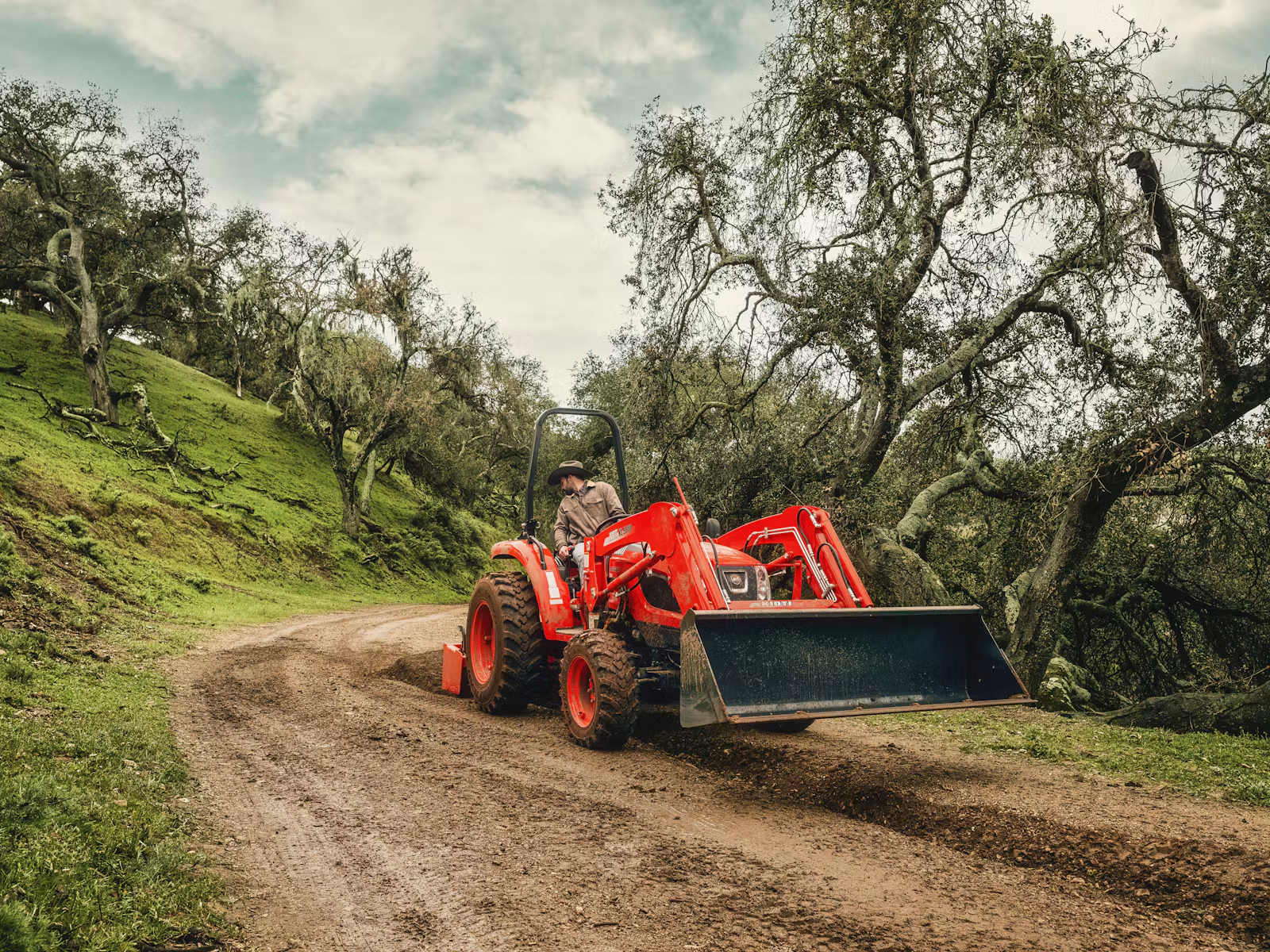
The KIOTI NS6010 is a manual-transmission compact utility tractor that deserves attention when rear-implement work is a large part of the job. Its combination of 57.7 gross engine hp, 48.3 PTO hp and a 12-forward/12-reverse synchronized shuttle gives it a different proposition from a similarly powered hydrostatic tractor. The decision is less about choosing the largest engine available and more about matching working gears, hitch equipment and hydraulic controls to the farm’s implements.
This guide covers the base NS6010, not the NS6010H. The H version uses hydrostatic travel and has its own PTO specification. Keeping that distinction visible prevents a used-machine advertisement or family brochure from turning into an inaccurate comparison.
On This Page
ToggleWhat the NS6010 offers a rear-implement buyer
A small mixed operation may need one tractor to mow, maintain tracks, move material and operate several seasonal tools. The NS6010 is worth evaluating where those jobs include sustained travel at a selected working speed and where a Category II hitch suits the intended equipment.
It is less straightforward if most hours are spent making very short, repeated loader movements or if every retained tool was selected for a much smaller tractor. Neither situation automatically rules it out, but each changes what the demonstration must prove.
Start with the three implements that account for the most annual work. Record their power requirements, mounting arrangement, hydraulic functions and expected working speeds. That list will reveal more about suitability than a comparison of tractor engine ratings alone.
Verified NS6010 specification
The Canadian NS6010 page identifies the manual model. KIOTI’s linked NS brochure, dated February 2022, separates the manual and HST columns and gives a clearly located rear-lift rating.
| Specification | NS6010 reference | Decision it informs |
|---|---|---|
| Gross engine power | 57.7 hp | Engine class |
| PTO output | 48.3 hp | Driven implement requirements |
| Transmission | Synchro shuttle, 12F/12R | Working speed and direction-change routine |
| Rear PTO | Independent, 540 rpm | Implement shaft speed |
| Hitch | Category II, position and draft control | Rear implement interface and control |
| Brochure lift | 2,493 lb at 24 inches aft of hitch | A rating with a defined reference point |
| Wheelbase | 75.5 inches | Platform dimensions |
| Weight with agricultural tyres | 4,027 lb | Tractor reference, not complete transport mass |
The website also displays a higher rear-lift figure without the same clearly stated measurement point. This guide uses the brochure’s explicitly located figure rather than treating unlike descriptions as interchangeable. The serial-specific documentation for an actual purchase remains essential, particularly where a proposed implement approaches a carrying limit.
Choosing useful gears instead of counting them
Twelve forward gears provide choices, but the important issue is whether those choices suit the work at the engine speed the implement requires. A tiller, cutter or other PTO-driven tool may need the tractor to travel more slowly through heavier material while maintaining its prescribed shaft speed.
During a demonstration, identify a normal working gear and a slower alternative for each main task. Then consider how frequently conditions require a change. A transmission that is satisfactory on a consistent field may be less convenient where short sections demand repeated speed adjustments.
The shuttle arrangement should also be demonstrated according to the manual. Synchronized shuttle does not mean the same thing as a power shuttle, and the clutch procedure matters during direction changes. Assess the physical workload of the actual operation rather than relying on a seller’s phrase such as “easy reverse.”
For a hypothetical weekly routine, suppose there are four hours of sustained rear-implement work and one hour of intermittent loader use. That is a different balance from four hours of loader cycling and one hour of mowing, even though both total five hours. The example is a planning method, not a productivity claim for this tractor.
Aglist’s transmission comparison explains why the work pattern matters. For the NS6010, the question is whether its manual routine suits the people and tasks involved.
What 48.3 PTO horsepower does—and does not—establish
Use the PTO figure to screen implements whose manufacturers specify PTO horsepower. A 57.7 engine-hp label cannot be used in place of 48.3 PTO hp. Keep the units and rating description attached to every number in a comparison worksheet.
For example, a hypothetical tool requiring a minimum of 50 PTO hp is not shown to satisfy that requirement on this specification. Conversely, a tool with a lower minimum still needs the correct shaft speed, driveline, mounting and operating conditions. Power is one gate in the decision, not the final approval.
The manual NS6010 and hydrostatic NS6010H have different listed PTO values. That is a reason to use the complete model designation, not a basis for claiming a particular fuel saving or measured field advantage. Such claims would need their own evidence.
For mowing and snow equipment, working width must be considered alongside material and intended travel speed. A tool selected only to cover the tractor’s tyre tracks may be poorly matched in another respect. The Aglist PTO guide provides a useful screening sequence.
Position control, draft control and implement behaviour
The NS6010 brochure lists position control with draft control. Position control concerns the selected hitch position; draft control relates hitch response to the load imposed by suitable ground-engaging equipment. These functions should be understood through the applicable operating instructions and the actual implement.
A buyer planning soil work should ask for a demonstration that explains when each control is appropriate. Do not treat draft control as an automatic solution for every grading or mowing task. Different implements establish their working position in different ways.
Hitch category is another distinct question. The NS6010 column is Category II. If a farm has a collection of Category I tools, assess each connection and any permitted adaptation rather than assuming a larger tractor makes the transfer easier.
Include the tool’s centre of gravity and complete mounting arrangement when checking lift. The brochure’s rating at 24 inches aft of the hitch is not permission to carry the same mass at any distance. Adding a quick hitch also changes the assembled arrangement and may affect the driveline.
Aglist’s quick-hitch compatibility article explains the interface questions through Category I examples. Use the principles to organise the checks, while obtaining the correct specifications for the NS6010’s actual Category II arrangement.
Rear hydraulics should follow the implement list
The NS brochure lists one rear remote and optional second-valve arrangements. The useful buying question is not simply whether the tractor has hydraulic couplers. It is which functions can be controlled, with what valve behaviour, and whether the installed setup suits the intended equipment.
A hydraulic top link, a side link and an independently adjusted implement function can create three separate control requirements. If adjustments can be made sequentially, a suitably specified switching arrangement may be considered; if independent controls are required, the package must provide them. Count the work functions before counting hose ends.
Likewise, a cylinder that moves occasionally presents a different requirement from a hydraulic motor expected to run continuously. Ask for the appropriate available flow, pressure, return arrangement and control mode for the specific attachment. A total tractor pump figure alone does not answer those questions.
On a used machine, identify the installed valves and any alterations. Keep a record of the setup so that a later attachment purchase does not start with guesswork. A functional demonstration should show the intended implement sequence, including any need to change controls between operations.
Loader capability is a separate part of the specification
A tractor chosen primarily for PTO work may still need to load material or carry pallets. Specify those loads independently. Record their mass, load centre, placement height and the attachment used, then assess the approved loader and ballast package.
The NS6010’s rear-lift rating does not establish loader capacity, and engine horsepower does not establish fork capacity. The loader capacity guide explains why the measurement location and attachment geometry matter.
For repeated loading, evaluate shuttle and clutch operation as part of the cycle. A tractor can satisfy the lifting requirement yet be less comfortable for a particular operator’s repetitive routine. That is a legitimate reason to compare an HST or power-shuttle alternative, even when the base NS6010 performs the rear-implement work satisfactorily.
Size, winter work and daily ownership
The NS6010 is an open-station tractor, so seasonal planning must include operator exposure. A short task near a building and a long clearing route across an exposed property are different use cases. Consider how long the operator will remain outside and whether work can be postponed during severe conditions.
For a rear-facing snowblower, test the available reverse working speeds at the required PTO speed. Include chute controls and rearward visibility in the equipment assessment. A blower that connects and turns is not yet a fully evaluated winter package.
Access planning should cover the complete tractor with its fitted tyres, loader and rear attachment. Gate width is only one measurement; turning space, overhead clearance and room to park implements can be more restrictive. An equipment layout drawn around a bare tractor can underestimate the space actually needed.
For transport, obtain the equipped mass and load arrangement. The brochure weight does not include every possible loader, tool and ballast combination. Do not infer trailer suitability from the tractor being described as compact.
Used NS6010: inspect the manual driveline and equipment history
Start with model and serial identification, then separate the condition of the tractor from the value of its attachments. A clean tractor with a poorly matched implement package can still require substantial additional spending before it serves the intended work.
A competent inspection should assess clutch engagement, gear selection, shuttle operation, brakes, steering and PTO function under suitable controlled conditions. Check service records and investigate unexplained operating behaviour. These are general inspection priorities, not claims of known model-specific defects.
Inspect hitch wear, stabilisers, loader pivots, hose routing and attachment locks. Check whether modifications are documented and suitable for the equipment. Missing guards, improvised hydraulic connections and uncertain structural repairs should be resolved through proper assessment rather than discounted as cosmetic issues.
Ask how the tractor was used, but verify the condition independently. Hour readings, appearance and a seller’s account are pieces of evidence, not substitutes for an inspection. Obtain actual estimates for required work and add them to the equipped purchase comparison.
Where to compare next
If the existing tools and property do not need this platform, review a smaller-series alternative such as the KIOTI CK4020. If the work demands a different cab, driveline or equipment package, the Massey Ferguson 2M.65 guide provides another compact-tractor reference. Neither is an automatic substitute; compare the constraints each package resolves.
The useful final comparison has one row per essential job. Mark power, mounting, controls, carrying, access and operator fit separately. An attractive base price cannot compensate for an unresolved requirement in a job the tractor must perform every week.
Frequently asked questions
Is the NS6010 hydrostatic?
The base NS6010 described here uses a 12F/12R synchronized shuttle. NS6010H is the hydrostatic version.
Which lift figure should I compare?
Use figures with the same defined measurement location and conditions. This guide preserves the brochure’s 2,493 lb at 24 inches aft of the hitch.
Can draft control replace implement setup?
No. It is a tractor control function whose use depends on the implement and task; it does not establish correct mounting or operating adjustment.
What is the most useful pre-purchase test?
Demonstrate the gears, controls and visibility needed by the main rear implement, then separately assess the loader cycle. That tests the two workloads most likely to influence the choice.
Share your experience
Help other Canadian buyers — leave a quick review for the
KIOTI NS6010
There are no reviews yet. Be the first one to write one.