Overview & Specs
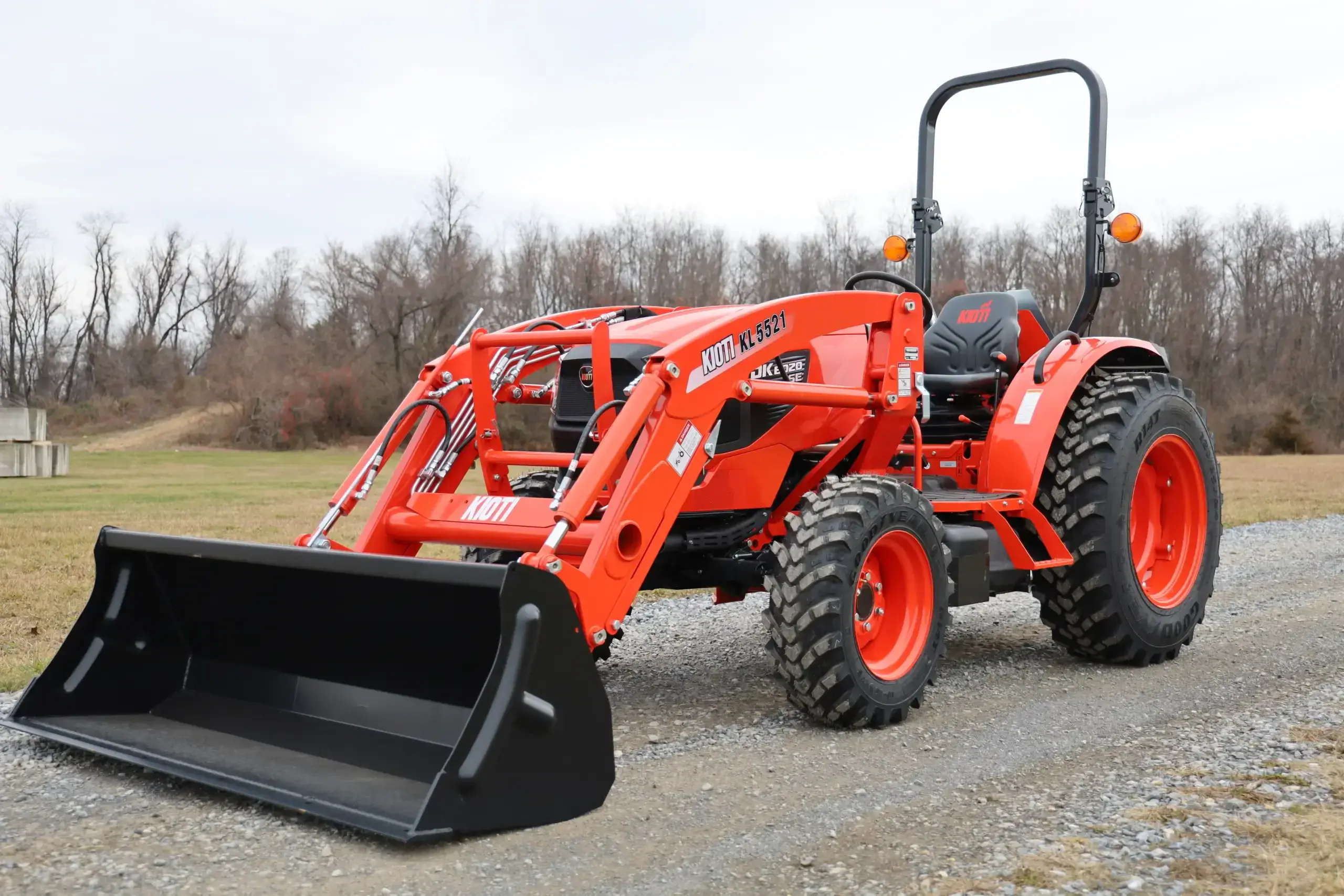
The KIOTI DK6020SEH puts a relatively high engine rating into a compact hydrostatic tractor, but its most important buying distinction is the relationship between power, footprint and implement fit. It can appeal to an acreage owner who wants pedal-controlled travel for frequent loader manoeuvres while retaining useful PTO capability. It is not automatically a substitute for a larger utility tractor simply because it belongs near the 60-horsepower end of the compact range.
This guide concerns the open-station DK6020SEH shown in KIOTI’s Canadian range. The cab version is separately listed. KIOTI also uses the transposed wording DK6020HSE in some source material and the product URL, so a purchase should be tied to the identification plate and actual configuration rather than a shortened advertisement title.
On This Page
ToggleThe key specifications—and the limits of what they say
The Canadian product page and the manufacturer’s DK series brochure support the following core specification. The brochure’s full model columns matter because hitch category and engine output vary across the family.
| Specification | DK6020SEH | How to use it |
|---|---|---|
| Gross engine power | 57.7 hp | Identify engine output, not attachment capacity |
| PTO power | 44.9 hp | Screen PTO-driven equipment |
| Transmission | Hydrostatic, three ranges | Match range and travel control to the job |
| Rear PTO | Independent, 540 rpm | Confirm both power and speed requirements |
| Three-point hitch | Category II, position control | Check retained tools individually |
| Wheelbase | 71.3 inches | Compact platform reference |
| Minimum-tread width | 62.8 inches | Starting point for access measurements |
| Open-station listed height | 96.8 inches | Measure the actual equipped tractor |
The source documents contain inconsistent fuel-capacity and remote-valve information, so those details are not presented here as settled equipment promises. Similarly, an unqualified rear-lift headline is not used as an implement allowance. These omissions keep the guide focused on specifications that can be matched to a clear configuration and meaning.
Compact dimensions do not remove chassis limits
The DK6020SEH’s dimensions can make it attractive where buildings, trees and storage space constrain a tractor purchase. Nevertheless, the room required to work is larger than the tractor’s bare width. A loader attachment extends the front envelope, while a rear tool sweeps a different path during a turn.
Walk the intended route with the whole package in mind. Identify the narrowest gate, the tightest approach and the place where the tractor must turn while carrying equipment. Record whether the limiting condition is width, height, length or visibility. Buying more engine output does not solve any of those geometry problems.
The same distinction applies to carrying. A heavier pallet or bale may demand a different loader arrangement, ballast or tractor class even when the engine has ample power for travelling around the property. The correct comparison is the approved loaded package at the required reach, not the engine rating divided by the asking price.
What hydrostatic control changes during a working day
Hydrostatic travel allows the operator to vary ground speed within the selected range using the travel pedals. That can be useful when approaching an attachment, positioning a bucket or alternating between short forward and reverse movements. The value comes from how often those adjustments occur, not from the transmission label alone.
The three ranges remain meaningful. Treating the highest range as a universal setting can produce an unsatisfactory demonstration for demanding work. Have the correct range-selection procedure explained and assess the tractor in an appropriate working range, with engine speed set for the task and any driven equipment.
Separate engine-speed control from ground-speed control during the demonstration. A PTO implement needs its prescribed shaft speed even when the tractor must creep through heavier material. An operator who understands that relationship can make a more useful comparison than one evaluating the machine only at idle in the dealer yard.
Pedal reach and ankle comfort deserve attention, especially where several people use the tractor. Ask each regular operator to assess the seat adjustment and control access. Aglist’s hydrostatic versus gear and shuttle guide helps frame the choice without assuming one transmission is best for every property.
Use 44.9 PTO hp when choosing driven implements
The engine and PTO figures answer different questions. The DK6020SEH’s 57.7 gross engine hp must not be substituted into a mower or blower requirement stated in PTO horsepower. Its listed PTO output is 44.9 hp.
For illustration, a hypothetical tool with a minimum requirement of 45 PTO hp is not shown to meet that minimum by a 44.9 hp specification. Rounding the tractor into a “60 hp” class is not a sound compatibility method. Obtain the applicable implement requirement and identify whether its stated figure refers to engine or PTO output.
After the power screen, consider how the tool will be used. A snowblower working through deep accumulated snow and a mower maintaining already-managed vegetation impose different operating demands. Suitable speed control helps the operator respond to changing load, but it does not change the implement’s approved power or mounting requirements.
Aglist’s PTO matching explanation covers the broader distinction. For the purchase itself, retain a written implement list with exact model numbers rather than a collection of approximate widths.
The Category II hitch is an important ownership detail
A buyer moving from a smaller tractor may expect every existing rear implement to transfer. The DK6020SEH’s Category II specification makes that assumption especially worth checking. Interface dimensions, pins, permitted adapters and implement structure must be assessed together.
Do not treat a bushing as universal proof of compatibility. A connection can appear to fit while leaving unresolved geometry, clearance or carrying questions. If a quick hitch is included, it becomes another specified component in the arrangement and may change PTO-driveline requirements.
Make a transfer table before trading the old tractor. Mark each attachment as confirmed, needing specified additional parts, unsuitable or still unverified. Include the expected cost of any approved changes. This can change the apparent value of a higher-powered tractor even when its base price looks attractive.
The Aglist quick-hitch article explains why the mounting label alone is insufficient. Its Category I examples are useful for understanding the checks; they are not approval to install a particular Category I hitch on this Category II tractor.
Plan the loader and hydraulic controls as one package
For bucket work, identify loading height and the space available to approach the receiving container. For forks, specify the actual load centre and the attachment’s own mass. For a grapple, include the hydraulic opening-and-closing circuit as well as the physical attachment mount.
A front auxiliary circuit and a rear remote solve different location and control needs. Count the functions you want to operate, and ask for a written description of how each is controlled. A statement that the tractor has “two remotes” is incomplete if the quote does not make clear which valves, couplers and operating modes are supplied.
The manufacturer’s DK brochure itself contains different presentations of rear remote equipment between its feature text and specification table. Inspect the actual machine and make the equipped circuit count part of the quotation. Do not assume that every used example has the same optional equipment.
For lifting, use the documentation for the complete loader setup. Aglist’s loader rating guide separates pivot-pin capacity, fork geometry and real load placement. A hydraulic control addition changes what can be commanded; it does not raise the tractor’s structural or stability limits.
Three situations that reveal whether it fits
A property with frequent loader positioning
Imagine a property where most tractor time involves moving loose material, maintaining storage areas and changing front attachments. HST control can be relevant because travel speed and direction change repeatedly. The demonstration should include safe positioning with the intended attachment, not merely driving the tractor unloaded.
Record time spent connecting equipment, manoeuvring and travelling. If attachment changes dominate the routine, a complete convenient mounting and hydraulic package may matter more than additional engine output. If long travel between work areas dominates, evaluate that part separately.
A mixed fleet of older rear implements
Here the critical issue is the Category II transition. The tractor may have enough PTO output for several existing tools while still requiring a careful interface review. A smaller retained implement can also leave an inconvenient working-width relationship with the tractor’s tyres.
Measure the actual fitted width and compare it with the implement’s useful working width. This is particularly relevant when a finishing pass is expected to cover the tyre tracks. Do not assume that a familiar attachment remains well matched simply because the larger tractor can power it.
Winter maintenance from an open station
For a short clearing routine, an open tractor may remain an acceptable choice. For prolonged exposure on a windy Saskatchewan lane, operator protection may become the deciding factor. Assess the expected working duration rather than assuming the higher engine rating makes the winter job comfortable.
Compare the separate cab configuration if weather exposure is the unresolved problem. Also assess blower orientation, control access and storage clearance. Aglist’s cab versus open-station comparison explores that ownership trade-off.
Used-machine inspection and the complete cost
Identify the exact version first, then inspect the tractor and installed equipment as a system. A used example may have a different loader, tyre package or hydraulic modification from the machine described in a current advertisement. Record identification for each major component.
Arrange a competent warm-machine assessment of HST travel response, range selection, steering, brakes and hydraulic functions. Check whether controls return and operate as intended, and investigate unusual behaviour through the applicable service process. These are inspection priorities, not documented recurring faults of this model.
Review maintenance records for the fluids and filters appropriate to the machine. Inspect hose routing and evidence of improvised electrical connections around auxiliary controls. A working grapple on the day of sale does not establish that the installation is suitable throughout loader movement or that all components have the required ratings.
Compare purchase options on an equipped basis: loader, attachment, ballast, required hydraulic controls, retained-tool adaptation, delivery and known corrective work. Avoid assigning invented resale premiums or fuel savings to the hydrostatic transmission. Actual quotations and your own annual workload provide a more defensible comparison.
Transport planning must likewise use actual equipped mass. Include attachments and ballast, and determine how the combination will sit on the trailer. Compact external dimensions do not establish that a familiar trailer remains suitable.
Frequently asked questions
Is DK6020HSE a different model from DK6020SEH?
KIOTI uses both word orders in the cited material. Verify the identification and full equipment specification; this guide follows the Canadian range heading DK6020SEH.
Does this guide cover the cab model?
No. It focuses on the open-station configuration. Cab dimensions, equipment and ownership considerations need their own verification.
Is it a Category I tractor?
The checked DK6020 column specifies Category II. Do not apply the hitch category of a lower-powered DK model to it.
Does HST mean unlimited pulling ability at low speed?
No. Range selection and variable speed control do not remove traction, chassis or operating limits.
When is another tractor a better choice?
When the unresolved need is greater carrying capacity, a different hitch interface, sustained weather protection or a substantially different work envelope. Choose the package that addresses that need directly rather than treating engine horsepower as a universal upgrade.
Share your experience
Help other Canadian buyers — leave a quick review for the
KIOTI DK6020SEH
There are no reviews yet. Be the first one to write one.