Overview & Specs
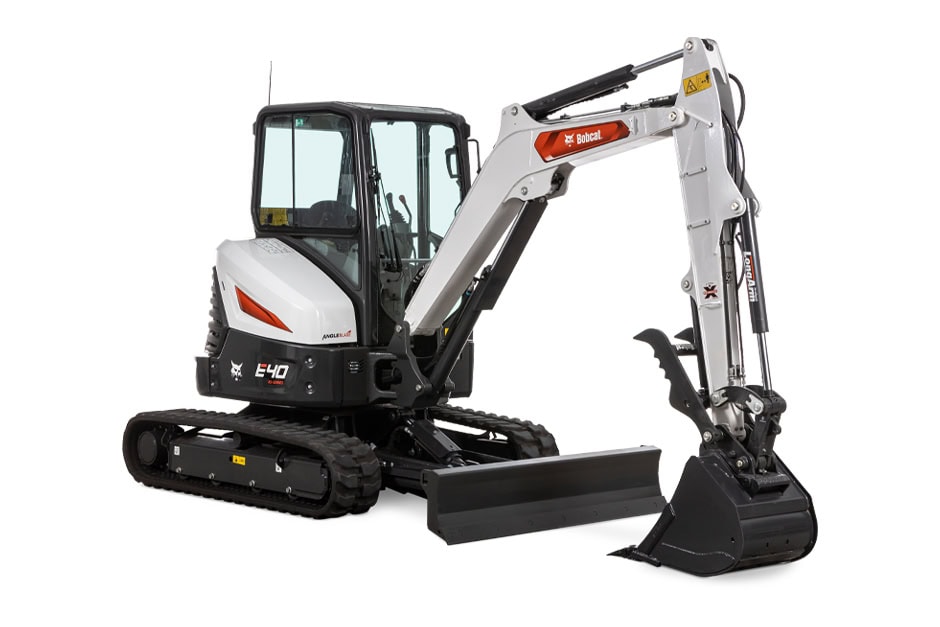
Bobcat E40 Compact Excavator
On This Page
ToggleIntroduction
The Bobcat E40 is one of the newest machines in Bobcat’s compact excavator lineup — a 4-tonne excavator introduced in late 2023 that combines a powerful 40-horsepower engine, best-in-class lift capacity, and a reduced tail swing with less than 2 inches of overhang. It’s built for operators who need serious digging and lifting performance but still have to work in confined areas and against obstacles. For prairie drainage, foundation, and utility work that demands power without a full-size machine, the E40 is a strong, modern choice.
On Aglist, the value is in understanding where the E40 fits in the compact excavator market, with real owner and operator feedback beside the spec sheet. The numbers tell you what it digs and lifts; the reviews tell you how the 40-horsepower engine performs under load, how the controls feel over a long day, and how it holds up over seasons.
The E40’s reduced tail swing — less than 2 inches of overhang — is a key part of its design, balancing lifting stability against tight-quarters capability. We explain what that means below, because tail swing is the most important design choice on any compact excavator.
Configurations & Pricing Context
The E40 is one of the most recently introduced models in Bobcat’s R2-Series compact excavator lineup, launched in late 2023 to fill out the 4-tonne class. It comes standard with a long arm for added reach and dig depth, and is offered with a canopy or optional enclosed cab. For Canadian year-round work, the enclosed cab with heat and A/C is the sensible choice.
The E40 runs the full range of compact excavator attachments — trenching and grading buckets, augers, hydraulic breakers, compactors, and more — with Bobcat’s coupler options. For prairie work that demands power and lifting, it’s a capable modern machine.
Pricing varies by configuration, attachments, and dealer. Because Dmytro has direct knowledge of Saskatchewan dealer and used pricing, we defer to local market figures over manufacturer-advertised numbers.
Key Specifications
| Specification | Bobcat E40 |
|---|---|
| Machine class | Compact excavator |
| Introduced | Late 2023 |
| Weight class | 4 tonne |
| Tail swing | Reduced (less than 2 in / 5 cm overhang) |
| Horsepower | 40 hp (turbocharged Bobcat engine) |
| Emissions | Tier 4 (no DPF) |
| Maximum reach at ground level | ~215 in (5.5 m) |
| Maximum dump height | ~147 in (3.7 m) |
| Rated lift capacity | ~3,939 lb (1,786 kg) |
| Bucket digging force | ~7,284 lbf (32.4 kN) |
| Arm | Long arm standard (adds ~12 in depth & reach) |
Specifications are verified against Bobcat specification data and independent spec databases. Confirm exact figures for the specific machine, year, and option package with your dealer.
Understanding Tail Swing (Read This Before You Compare)
Tail swing is the most important design concept on any compact excavator, and the E40 takes a reduced-tail-swing approach — a deliberate balance.
Tail swing describes how far the rear of the machine — the counterweight and engine housing — extends past the tracks when the upper structure rotates. The E40 has a reduced tail swing with less than 2 inches of overhang. That’s not quite zero tail swing, but it’s close — the rear barely extends past the tracks, so the machine is at home working in confined areas or against obstacles, while the small amount of overhang allows a bit more counterweight for stronger lifting and stability.
This positions the E40 between a true zero-tail-swing machine (like the E35) and a conventional-tail-swing machine (like the E48). For prairie operators, that’s often an ideal compromise in this size class: you get best-in-class lift capacity and a powerful engine, while still being able to work close to walls and obstacles with care. Just be aware that the small overhang means you watch the rear when working absolutely flush against a wall, unlike a true zero-tail-swing machine.
Build & Engineering Detail
The E40’s standout is its 40-horsepower turbocharged Bobcat engine — strong power for a 4-tonne machine, which operators notice when backfilling trenches or slewing a loaded bucket uphill. Like all Bobcat compact excavators, it meets Tier 4 emissions without a diesel particulate filter, avoiding the regeneration interruptions and added maintenance of DPF-equipped competitors.
The machine’s lift capacity ranks among the best in its class at about 3,939 lb, supported by carefully tuned hydraulics and a durable slew bearing. It comes standard with a long arm, which adds about 12 inches of digging depth and reach over a standard arm — useful for deeper trenches and working farther from the machine without repositioning. Maximum reach at ground level is about 215 inches with a dump height around 147 inches.
As a recent R2-Series machine, the E40 includes the series’ refinements: low-effort joysticks with fingertip control, display options with depth check compatibility, an integrated lift eye, and a redesigned engine built for simplified maintenance and improved cold-weather operation. Steel hydraulic lines and sealed electrical connections suit demanding conditions.
Best Applications
The E40 is a strong fit for:
- Power-demanding drainage and foundation work — the 40-horsepower engine and best-in-class lift handle tough ground, deeper digging, and heavier material.
- Lifting and material placement — setting culverts, pipe, and material where the ~3,939 lb lift capacity matters.
- Confined-area work, with care — reduced tail swing allows working close to obstacles while retaining strong lifting.
- Buyers wanting a modern, powerful 4-tonne machine — as a recent introduction, it brings current features and engineering.
For absolute flush-to-wall work, the zero-tail-swing E35 has an edge; for more weight and conventional-tail-swing stability, the E48 and E55 step up. The E40’s niche is power and lifting with near-zero tail swing.
How the E40 Fits the Bobcat Lineup
The E40 sits in the 4-tonne slot of Bobcat’s compact excavator range, between the 3.x-tonne E35 and E38 below and the 4.5-to-5-tonne E48 and E55 above. With its reduced tail swing, it bridges the gap between the zero-tail-swing machines and the conventional-tail-swing machines — offering strong power and best-in-class lift while staying capable in tight quarters. As one of the newest models, it represents Bobcat’s current engineering in this size class.
Bobcat E40 Reviews & Ratings
On Aglist, open the Reviews & Ratings section on this page to see how the E40 performs where it matters: digging and lifting power under load, tight-quarters capability, hydraulic smoothness, control feel, cold-weather operation, and serviceability. If you own an E40, your review helps the next prairie buyer judge this newer, powerful machine.
Frequently Asked Questions
When was the Bobcat E40 introduced? The E40 was introduced in late 2023 as a new 4-tonne model, filling out Bobcat’s 3-to-5-tonne compact excavator lineup alongside the E32, E35, E38, E48, and E55.
Does the Bobcat E40 have zero tail swing? Not quite — it has a reduced tail swing with less than 2 inches of overhang. That’s close to zero, letting it work in confined areas and near obstacles, while the small overhang allows more counterweight for stronger lifting. For true zero tail swing, look at the E35.
How much horsepower does the Bobcat E40 have? 40 horsepower from a turbocharged Bobcat engine — strong for a 4-tonne machine, noticeable when backfilling or slewing loaded buckets uphill.
What is the lift capacity of the Bobcat E40? Rated lift capacity is about 3,939 lb (1,786 kg), which ranks among the best in its class. Actual lifting varies with reach and angle — check the lift chart for the positions you’ll use.
Does the Bobcat E40 have a DPF? No. Its turbocharged Tier 4 engine meets emissions without a diesel particulate filter — a brand-wide Bobcat advantage avoiding regeneration interruptions and DPF maintenance.
What’s the reach of the Bobcat E40? Maximum reach at ground level is about 215 inches (5.5 m), with a maximum dump height around 147 inches. It comes standard with a long arm, adding about 12 inches of depth and reach.
Is the Bobcat E40 good for cold-weather work? Yes — with the optional enclosed cab and heat, and the R2-Series engine designed for improved cold-weather operation, it’s well suited to prairie winters.
How does the E40 compare to the E48? The E40 (4-tonne, reduced tail swing) prioritizes near-zero tail swing with best-in-class lift; the E48 (4.5-tonne, conventional tail swing) adds more weight and lifting stability. Choose the E40 for tight-quarters power, the E48 for maximum lifting where conventional tail swing is acceptable.
What’s the difference between the E40 and the E38? The E40 is a newer, heavier (4-tonne) machine with a 40-horsepower engine and reduced tail swing; the E38 is a 3.8-tonne zero-tail-swing machine with 33 horsepower. The E40 offers more power and lift; the E38 offers true zero tail swing for the tightest work.
Related Models
- Compact & Mini Excavators — browse and compare excavators across all brands on Aglist.
- Bobcat E38 — the 3.8-tonne zero-tail-swing machine one step down.
- Bobcat brand hub — explore the full Bobcat equipment lineup.
Share your experience
Help other Canadian buyers — leave a quick review for the
Bobcat E40
There are no reviews yet. Be the first one to write one.