Overview & Specs
Bobcat E19 Mini Excavator
On This Page
ToggleIntroduction
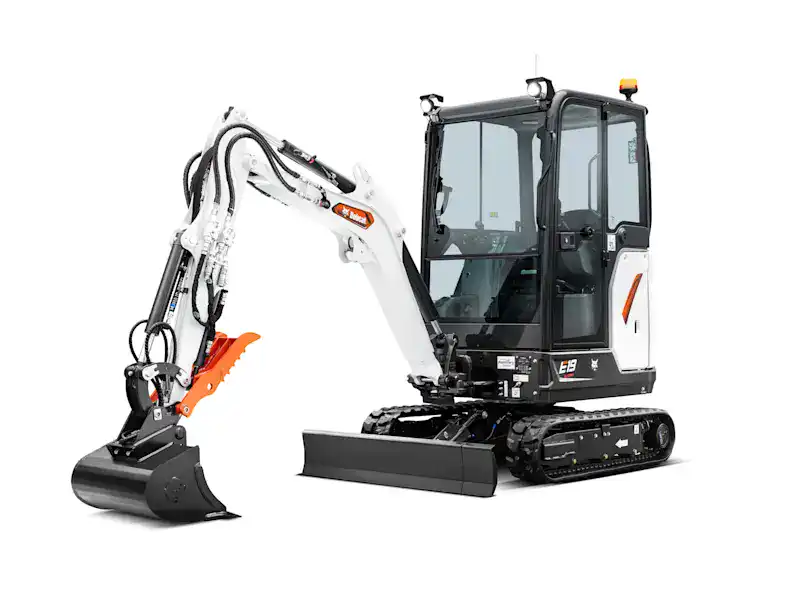
The Bobcat E19 is a sub-2-tonne mini excavator that takes a different approach from its zero-tail-swing siblings: it uses a conventional tail swing to deliver best-in-class digging and lifting stability in a compact, transportable package. For operators who need a small, easily trailered excavator but prioritize lifting performance and stability over working flush against walls, the E19 is the machine that balances those demands. It still fits a retractable undercarriage for tight access — it just trades zero tail swing for the extra stability a conventional counterweight provides.
On Aglist, the value is in understanding where the E19 fits in the compact excavator market relative to the zero-tail-swing E17 and E20, with real owner and operator feedback beside the spec sheet. The numbers tell you what it digs and lifts; the reviews tell you how it handles, how stable it feels with a load, and how the controls feel over a long day.
The key concept to understand with the E19 — and the reason to choose it over its siblings — is tail swing. The E19 is a conventional-tail-swing machine, which means its counterweight extends past the tracks for greater stability. We explain the trade-off below, because choosing between conventional and zero tail swing is the most important decision when picking a mini excavator.
Configurations & Pricing Context
The E19 is part of Bobcat’s compact excavator lineup in the 1-to-2-tonne class. It’s offered with a canopy or optional enclosed cab — and for Canadian year-round work, the enclosed cab with heat is the sensible choice. Its retractable undercarriage narrows for access through gates and doorways, then expands for a stable digging stance.
The E19 runs trenching and grading buckets, augers, and hydraulic breakers within its size class, using Bobcat’s attachment system. For prairie utility and landscaping work that values lifting stability, it’s a capable small machine.
Pricing varies by configuration, attachments, and dealer. Because Dmytro has direct knowledge of Saskatchewan dealer and used pricing, we defer to local market figures over manufacturer-advertised numbers.
Key Specifications
| Specification | Bobcat E19 |
|---|---|
| Machine class | Mini excavator |
| Operating weight | ~1,950 kg (4,300 lb) |
| Weight class | 1.9 tonne |
| Tail swing | Conventional |
| Undercarriage | Retractable for tight access |
| Maximum dig depth | ~8 ft (2.4 m) |
| Engine | Tier 4 diesel |
| Travel | Two-speed |
| Notable | Best-in-class digging stability in its size class |
Specifications are verified against Bobcat specification data and independent spec databases. Confirm exact figures for the specific machine, year, and option package with your dealer.
Understanding Tail Swing (Read This Before You Compare)
Tail swing is the most important design concept on any compact excavator, and the E19 sits on the conventional side of that choice — which is exactly its selling point.
Tail swing describes how far the rear of the machine — the counterweight and engine housing — extends past the tracks when the upper structure rotates. A conventional-tail-swing machine like the E19 has a counterweight that swings well past the tracks. The advantage is stability and lifting performance: that rearward counterweight balances loads better, which is why the E19 delivers best-in-class digging stability in its size class. The trade-off is that the operator must watch the rear when working near walls, fences, or obstacles, because the back of the machine overhangs the tracks as it rotates.
By contrast, the zero-tail-swing E17 and E20 keep the rear within the track width for working flush against obstacles, but typically give up some lifting stability to do it. So the choice between the E19 and its siblings comes down to your work: if you frequently dig in open areas and prioritize lifting and stability, the E19’s conventional design is the better fit. If you constantly work close to walls and structures, a zero-tail-swing machine serves you better. Neither is universally “better” — they’re built for different priorities.
Build & Engineering Detail
The E19 runs a Tier 4 diesel sized to its 1.9-tonne class, paired with a hydraulic system tuned for the digging and lifting that define this machine’s purpose. Bobcat positions the E19 specifically for best-in-class digging performance in tight spaces, and the conventional tail swing is central to that — the counterweight provides the stability that lets a small machine lift and dig confidently.
Like its siblings, the E19 offers a retractable undercarriage for access through narrow openings, then a wider stance for stable work. Bobcat mounts the hydraulic cylinder on top of the boom on machines in this range, protecting it from accidental contact with the trench or obstacles — a practical durability feature for a machine that works in tight, abrasive conditions. Steel hydraulic lines routed through protected channels add further protection over exposed rubber hoses.
Daily maintenance points are grouped for easy access, and the design prioritizes the uptime that matters when a small machine is earning its keep on a job site.
Best Applications
The E19 is a strong fit for:
- Stability-focused tight work — digging and lifting in confined areas where the conventional counterweight’s stability is an advantage.
- Utility and drainage work — trenching and pipe-setting where lifting performance matters.
- Landscaping and acreage projects — grading, planting, and material handling with a small, transportable machine.
- Buyers who prioritize lifting over working flush against walls — the E19’s design favours stability.
It is a light-duty machine, and its conventional tail swing makes it less suited to working tight against structures than the zero-tail-swing E17 or E20. For deeper or heavier work, step up to a 2.5-to-4-tonne machine like the E26 or E32.
How the E19 Fits the Bobcat Lineup
The E19 sits in Bobcat’s sub-2-tonne compact excavator range alongside the zero-tail-swing E17 and E20 — but it’s the conventional-tail-swing option, chosen for stability rather than ultra-tight access. Above it, the E26 (minimal tail swing) and E32 move into mid-size compact excavator capability. Within its size class, the E19’s distinction is best-in-class digging stability, making it the pick for operators who value lifting performance in a small machine.
Bobcat E19 Reviews & Ratings
On Aglist, open the Reviews & Ratings section on this page to see how the E19 performs where it matters: digging and lifting stability, performance in its size class, control feel and operator comfort, and durability over time. If you own an E19, your review helps the next prairie buyer weigh conventional stability against zero-tail-swing access.
Frequently Asked Questions
What is the operating weight of the Bobcat E19? About 1,950 kg (roughly 4,300 lb), placing it in the 1.9-tonne class. It’s small enough to trailer easily while offering more stability than the lightest micro machines.
Does the Bobcat E19 have zero tail swing? No — the E19 uses a conventional tail swing, where the counterweight extends past the tracks. This gives it best-in-class digging and lifting stability in its size class, at the cost of needing to watch the rear when working near obstacles. For zero tail swing, look at the E17 or E20.
Why choose the E19 over the E17 or E20? Stability and lifting performance. The E19’s conventional counterweight balances loads better than the zero-tail-swing machines, making it the choice when you dig in open areas and prioritize lifting. Choose the E17 or E20 instead if you frequently work flush against walls and structures.
How deep can the Bobcat E19 dig? Maximum dig depth is roughly 8 feet (about 2.4 m), suiting trenching, drainage, and utility work in its size class. Confirm the exact figure for the specific configuration with your dealer.
What can the Bobcat E19 be used for? Utility and drainage trenching, pipe-setting, landscaping, grading, and material handling — particularly where lifting stability matters. It’s a small, transportable machine built for digging performance.
How much does stability matter on a mini excavator? A great deal when you’re lifting — setting pipe, placing culverts, handling material, or digging at full reach. The E19’s conventional tail swing provides that stability, which is its main advantage over the zero-tail-swing machines in the same size class.
Is the Bobcat E19 good for cold-weather work? With the optional enclosed cab and heat, yes — it’s usable through prairie winters. For year-round comfort, the enclosed cab is worth specifying.
Does the Bobcat E19 have a retractable undercarriage? Yes — like its siblings, it can narrow for access through gates and doorways, then extend to a wider, more stable digging stance.
Should I buy an E19 or step up to an E26? The E26 is larger (2.6-tonne class), with more dig depth and lifting capacity, and uses minimal tail swing. If the E19’s size and capacity meet your needs, it’s the more transportable choice; if you need more reach and power, the E26 is the step up.
Related Models
- Compact & Mini Excavators — browse and compare excavators across all brands on Aglist.
- Bobcat E17 — the zero-tail-swing alternative in a similar size class, for tight-access work.
- Bobcat brand hub — explore the full Bobcat equipment lineup.
Share your experience
Help other Canadian buyers — leave a quick review for the
Bobcat E19
There are no reviews yet. Be the first one to write one.