
Overview & Specs
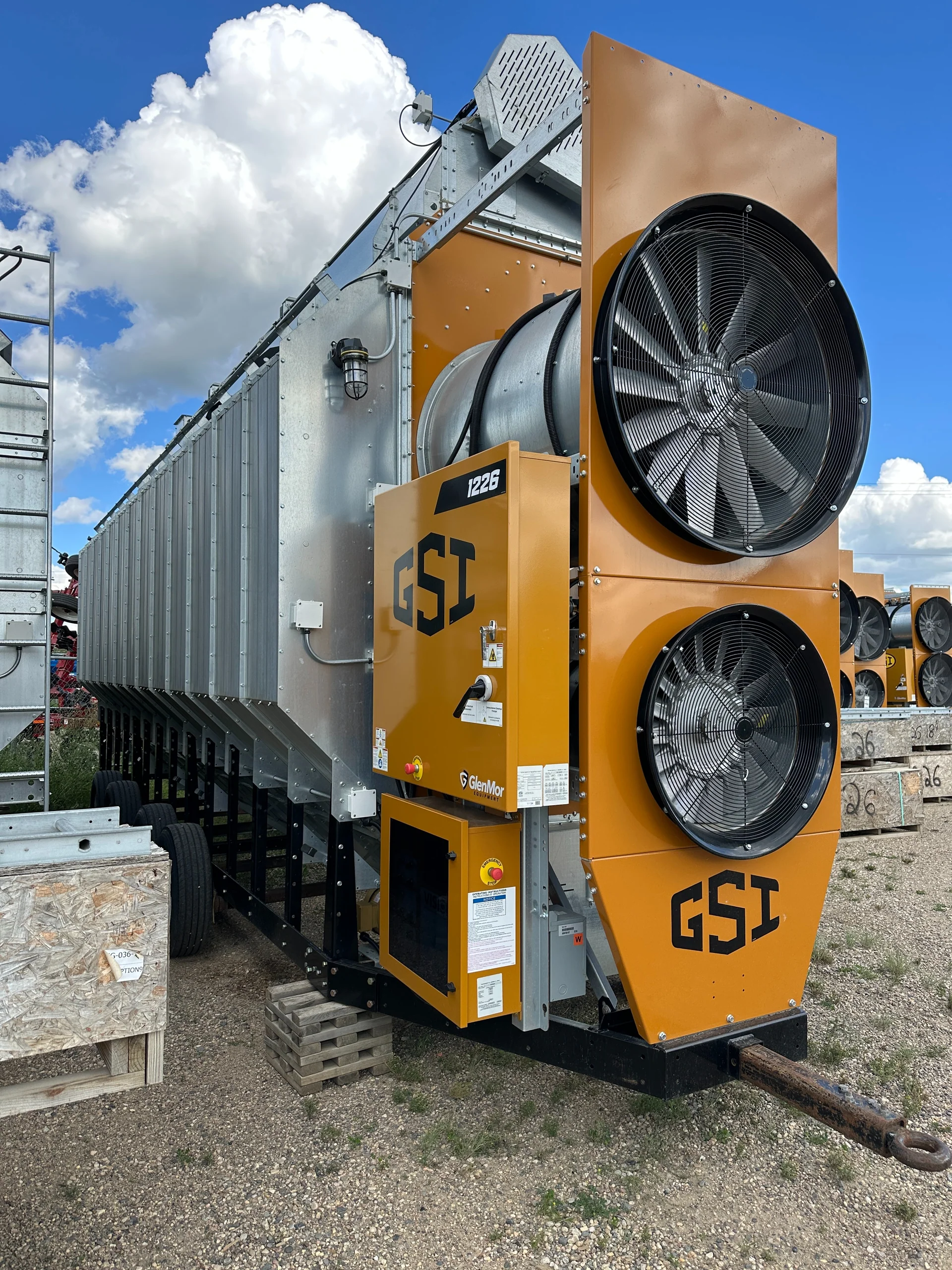
GSI 1226 Portable Grain Dryer (1200 Series) — Specs, Capacity & Drying Rate
Harvest doesn’t wait—especially in Canada, where weather windows can close fast. The GSI 1226 portable dryer in the 1200 Series is built for farms that want continuous-flow performance with the option to run Dry & Cool or All Heat, depending on crop, moisture, and storage plan.
This page breaks down the numbers that matter (bushels per hour, holding capacity, transport footprint) and explains what those specs mean in real-world use.
On This Page
ToggleWhat makes the GSI 1226 different in the 1200 Series?
The 1200 Series is a single-module portable dryer designed around two vane axial fans and two heaters, each with its own plenum, using a 67/33 split. It’s not expandable (so you’re choosing a complete package up front).
The big advantage here is flexibility: the series is described as able to operate in All Heat, Dry & Cool, Continuous Flow, or Batch modes—useful when you’re switching between crops or changing storage strategy during harvest.
GSI 1226 drying capacity (bushels per hour)
Dry & Cool performance (1226)
- 25% → 15%: 450 BPH
- 20% → 15%: 730 BPH
All Heat performance (1226)
- 30% → 15%: 540 BPH
- 25% → 15%: 730 BPH
- 20% → 15%: 1,180 BPH
Buyer note (important): These rates are published at 5-point removal for the 1200 Series. Real throughput will still vary with outside temperature, crop type, and incoming moisture—but these numbers are a solid baseline for comparing models.
Holding capacity, grain columns, and augers (1226)
Grain columns
- 14″ x 26′ long grain columns (Model 1226)
Holding capacity
- Grain column holding capacity: 611 BU
- The 1226 column/size class is shown elsewhere on the same page as 708 BU total holding capacity (for the 26′ column configuration).
Loading and unloading
- Top auger (loading): 8″ / 10 HP, rated 3,800 BPH
- Bottom auger (unloading): 8″ flight / 10″ tube – 10 HP
- Meter roll drive: VFD, 1 HP
Fans, heaters, and power (1226)
Heater capacity (maximum)
- Top heater: 1 @ 7.5 million BTU/hr
- Bottom heater: 1 @ 3.0 million BTU/hr
Fan configuration (3-phase)
- Top fan: 1 @ 25 HP, 42″
- Bottom fan: 1 @ 12 HP, 28″
Electrical reference (3-phase examples shown on page)
- 230V: 154/225 amps (min/max)
- 460V: 80/112 amps (min/max)
- 575V: 68/95 amps (min/max)
Transport and installed footprint (1226)
If you need a portable unit that still has serious drying muscle, footprint matters:
- Transport length (hitch to discharge auger): 35’2″
- Transport width: 8′
- Transport height: 13’5″ (11’9″)
- Approx. transport weight: 12,000 lbs
- Installed length: 33’2″, installed height: 14’6″
Monitoring and control (why it matters in harvest)
GSI highlights the ability to monitor and control dryers remotely using GSI Connect—handy when you’re bouncing between trucks, bins, and field decisions. The page lists remote functions like seeing status/moisture/temperature, adjusting set points, changing unload speeds, and receiving alerts.
For a 1226-sized dryer, that’s not just “nice to have”—it can reduce unnecessary trips and help you keep drying consistent when the day gets chaotic.
Who the GSI 1226 is a strong fit for
The 1200 Series is positioned for small to medium farms that want flexibility in drying options, including corn and other grains in Dry & Cool, and corn or rice in All Heat.
Practical shortlist check:
- You want up to 1,180 BPH published All Heat performance at 20→15 (5-point removal)
- You prefer a single-module, non-expandable portable package (simple, complete, predictable)
- You want two fan/heater architecture for operational flexibility
GSI 1226 FAQ — Real-World Setup, Modes & Reviews (Canada)
What kind of farm is the GSI 1226 best suited for?
The 1226 is typically chosen by farms that want portable continuous-flow drying but still need meaningful throughput during tight harvest windows. It’s a solid fit when you need flexibility in yard placement while keeping a steady drying workflow.
How should I choose between Dry & Cool and All Heat in real life?
Think workflow first, not theory:
- If your priority is storage readiness right after drying (especially when bins fill fast), many operators prefer a workflow where cooling is built into the process.
- If your priority is pushing volume during short windows, farms often run a workflow focused on drying pace and handle cooling/logistics afterward.The “best” option is the one that matches your labour availability, bin situation, and weather pattern.
What do reviews usually reveal that specs don’t?
Specs show what the dryer can do; reviews show how it behaves when harvest gets messy:
- consistency when outside temps drop at night
- how often it needs “babysitting”
- how forgiving it is when moisture swings
- cleanout convenience and day-to-day maintenance habits that prevent downtimeThat’s why “Reviews” is your strongest SEO advantage.
What are the most common setup mistakes with portable dryers like the 1226?
A few issues come up again and again:
- Yard flow bottlenecks (trucks waiting, awkward auger angles, slow transfer to bins)
- Underestimating electrical readiness (service size, panel capacity, long runs)
- Not planning fuel supply and delivery reliability during peak harvest
- Running aggressive settings while ignoring changing humidity/temperatureFixing layout and planning often improves “performance” as much as upgrading equipment.
What should I inspect first when buying a used GSI 1226 in Canada?
Start with the expensive problems:
- Heat system condition and stable operation
- Fans: smooth startup, no unusual vibration/noise
- Metering consistency (steady flow, no surging)
- Evidence of corrosion, patched panels, or neglected cleanout points
- Electrical compatibility with your site (so you don’t get forced into a costly retrofit)
What questions should I ask the seller before I drive to view it?
Ask for:
- reason for selling and how it was used each season
- maintenance/service history (even simple notes are valuable)
- any recurring issues they worked around
- a short video of startup and running operation
- what the unit was connected to (power/fuel setup)This filters out time-wasters and helps you compare listings fairly.
How do I compare the 1226 vs other 1200 Series models without obsessing over tables?
Use a 3-step shortlist:
- Choose models that match your harvest pace (how fast grain arrives)
- Eliminate options that don’t fit your yard realities (power + layout + storage flow)
- Use reviews to pick the unit that is easier to run and maintainIn practice: specs narrow the list; reviews decide.
What should a “high-quality” Aglist review include for a 1226?
Encourage reviewers to write what buyers search for:
- crop type and typical moisture situation (rough range is fine)
- drying approach used and why
- one clear benefit + one clear drawback
- note about their yard setup (storage plan and grain handling flow)This makes reviews useful and creates long-tail SEO.
Can the 1226 be a long-term solution, not just a temporary portable unit?
Yes—if your site flow is designed well and the dryer matches your acreage/harvest rhythm. Many farms keep portable units long-term because they value flexibility. The key is ensuring the dryer isn’t trapped behind a slow transfer or poor layout.
What maintenance habits typically improve uptime during harvest?
Operators who report fewer issues usually follow a simple routine:
- quick daily checks (airflow path, moving parts, leaks, unusual sounds)
- consistent cleanout schedule, especially when switching crops
- keeping a small kit of critical spares on hand
- writing down “known good” operating routines for common conditions
Why does this page include both specs and reviews on Aglist?
Because buyers don’t just want a brochure—they want confidence. Specs help you shortlist the right class of machine; reviews help you predict ownership experience, operating stress, and whether the dryer fits real Canadian harvest conditions.
GSI 1226 Reviews & Ratings
Share your experience
Help other Canadian buyers — leave a quick review for the
GSI 1226
There are no reviews yet. Be the first one to write one.


