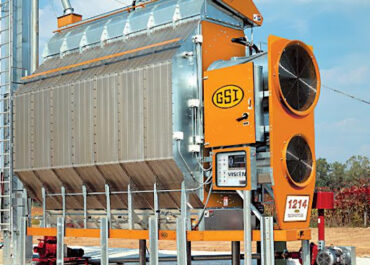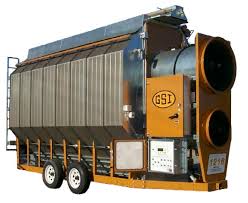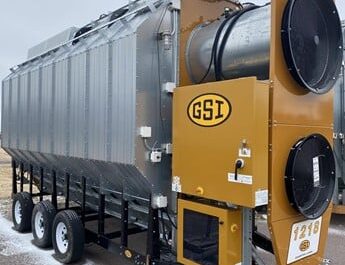
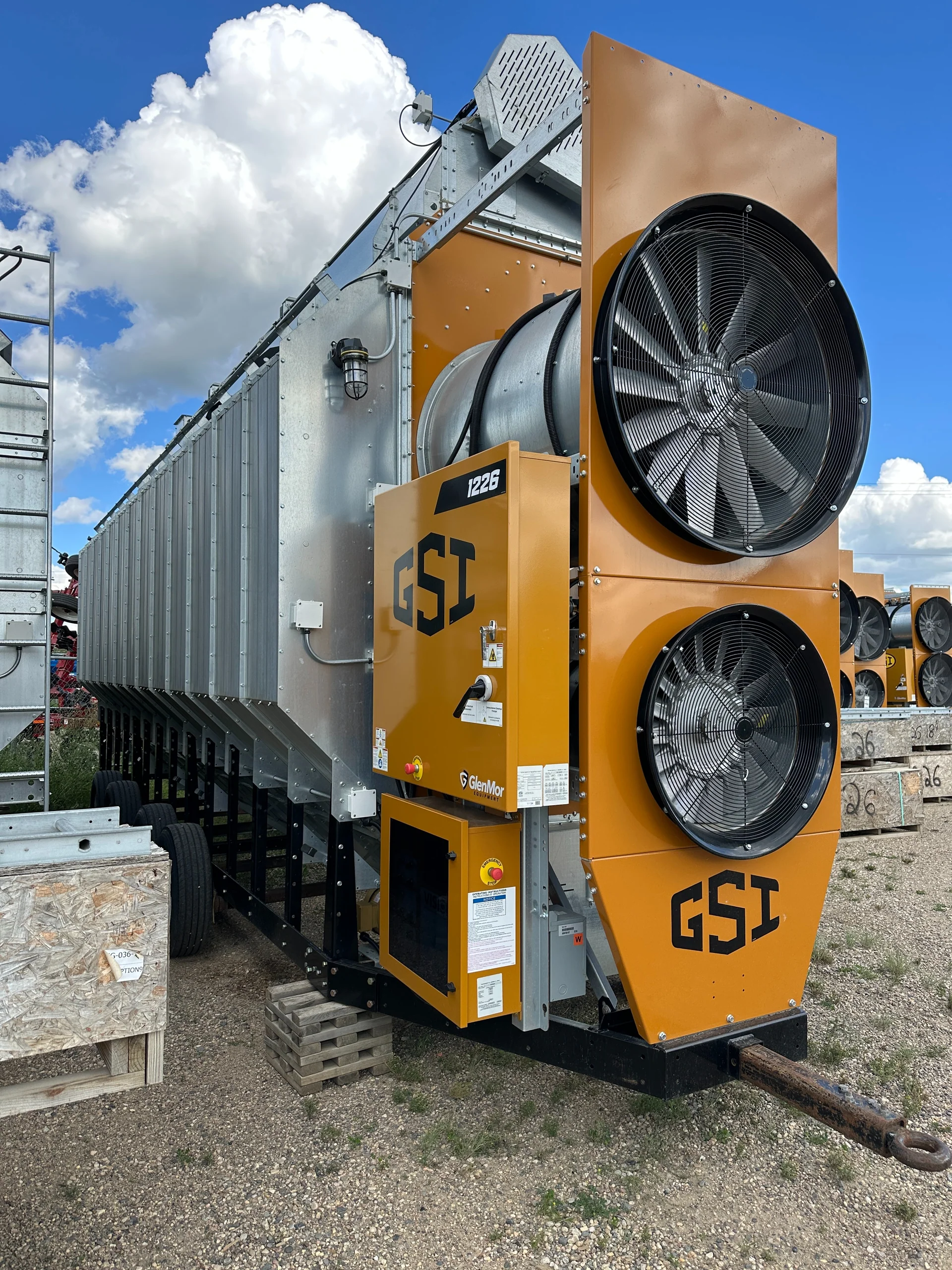
Overview & Specs
GSI 1222 Portable Grain Dryer — Specs and Reviews for Canadian Farms
The GSI 1222 is a portable dryer in the GSI 1200 Series built around continuous-flow operation with flexible drying approaches (Dry & Cool or Full Heat). But numbers alone don’t tell the full story. What Canadian buyers usually want to know is: How does it run in real harvest pressure? Is it easy to live with? Does it hit moisture targets consistently?
That’s why this page is built as a mix of published specs and what matters most on Aglist: photos, owner feedback, and reviews that explain the day-to-day experience.
On This Page
ToggleQuick performance snapshot (GSI 1222)
Dry & Cool rates (published)
- 25% → 15%: 400 BPH
- 20% → 15%: 640 BPH
Full Heat rates (published)
- 30% → 15%: 480 BPH
- 25% → 15%: 650 BPH
- 20% → 15%: 1,060 BPH
These numbers help you compare models fairly (same rating method), then reviews help you understand what those numbers feel like on an actual yard.
Why reviews matter more than the spec sheet
A portable dryer can look “perfect” on paper and still be frustrating in real life. Reviews on Aglist are meant to answer the questions spec tables don’t:
Is it consistent in changing conditions?
Farmers often mention whether the dryer is predictable when outside temps drop at night, when moisture swings, or when the yard gets busy.
Is it easy to operate during peak harvest?
Controls, adjustments, cleanout access, and how forgiving the machine is when you’re tired at 1 a.m. — reviews reveal this fast.
What’s the ownership experience?
Parts availability, maintenance access, and how often you end up “babysitting” the unit are exactly the details buyers search for.
Key specs Canadian buyers compare on the 1222
Grain columns and holding capacity
- Grain columns: 14” x 22’
- Total holding capacity: 599 BU
- Grain column holding capacity: 517 BU
Fans and heaters (site planning basics)
- Top fan: 20 HP (42”), bottom fan: 12 HP (28”)
- Top heater: 6.75 million BTU/hr, bottom heater: 3.0 million BTU/hr
Electrical reference (3-phase)
- 208V: 136/213 amps
- 230V: 126/197 amps
- 460V: 66/98 amps
- 575V: 57/84 amps
Transport footprint
- Transport length: 31’2”
- Width: 8’
- Approx. transport weight: 10,500 lbs
- Installed length: 29’2”, installed height: 14’6”
What to include in a helpful review (Aglist standard)
If you want Aglist reviews to actually help people (and rank in Google), guide users to write reviews that include:
Your crop + moisture range
Example: wheat vs barley vs corn, typical incoming moisture, and target moisture.
Your drying approach
Did you run it Dry & Cool or Full Heat? What worked best for your storage plan?
One “pro” and one “con”
Even short reviews become powerful when they include one clear advantage and one real drawback.
Setup notes
Power/fuel situation, site layout, grain handling flow — these details make reviews uniquely useful for Canada.
Explore GSI 1222 listings on Aglist
On Aglist, use the listing cards to compare:
- specs and configuration
- photos and condition
- location (Canada)
- ratings and written reviews
If you’re choosing between similar models (like 1220 vs 1222 vs 1226), specs narrow the shortlist — reviews usually decide the winner.
Ты всё правильно заметил (и Google AI тут по делу). FAQ не должен повторять табличные цифры, которые уже есть выше. FAQ должен добавлять новую ценность: опыт, выбор режима, типичные ошибки, чек-лист для б/у, что писать в отзывах, как сравнивать модели, как подготовить площадку и т.д.
Ниже — исправленный FAQ-блок для GSI 1222, без повторения цифр (ни BPH, ни BU, ни amps, ни размеры). Он заточен под SEO-запросы “reviews / problems / setup / which mode / used / Canada”.
GSI 1222 FAQ — Real-World Use, Setup & Reviews (Canada)
What’s the best way to use reviews when choosing a GSI 1222?
Don’t look at star rating alone. Filter reviews by crop type, typical incoming moisture, and harvest workflow (how fast grain arrives to the yard). The best reviews explain why the dryer worked well (or didn’t) in a specific setup—especially when weather conditions changed mid-harvest.
Dry & Cool vs Full Heat — how do operators usually decide?
Most farms choose based on storage plan and labour:
- If you want grain to be more comfortable for storage right away, operators often lean toward a workflow that prioritizes cooling as part of the process.
- If the main goal is pushing volume during short harvest windows, farms may prefer a workflow that emphasizes drying speed, then handle cooling/logistics after.Your choice should match how quickly you can move grain from dryer to storage and what risks you’re managing (hot grain, condensation, time pressure).
What are the most common mistakes people make with portable dryers like the 1222?
A few mistakes show up again and again in owner feedback:
- Undersizing power supply or ignoring site electrical limits
- Poor yard flow (trucks waiting, awkward auger angles, bottlenecks to bins)
- Running too aggressively when conditions change (night temps, humidity spikes)
- Not building a consistent routine for cleanout and inspection during harvest
What should I check first when buying a used GSI 1222 in Canada?
Start with “expensive-to-fix” areas:
- Heat system condition and stable burner operation
- Fan health (noise, vibration, smooth startup)
- Metering consistency (steady feed/unload without surging)
- Signs of corrosion, previous repairs, and panel condition
- Whether the electrical setup matches your farm’s service (so you don’t end up in a costly retrofit)
How do I compare the 1222 to similar models without getting lost in specs?
Use a simple 3-step filter:
- Pick models that match your harvest pace (how fast grain arrives)
- Eliminate options that don’t fit your site realities (power + layout)
- Use reviews to decide which unit is easier to live with (operation, maintenance, consistency)
Specs create the shortlist; reviews choose the winner.
What kind of review is most helpful (and what should I encourage users to write)?
The best reviews include:
- Crop + approximate moisture range (no need for perfect numbers)
- Operating approach used (and why)
- One clear benefit (example: “easy to tune,” “reliable,” “good in changing weather”)
- One honest drawback (example: “needs attention when conditions shift,” “site power matters”)
- A quick note on site setup (grain handling flow, storage plan)
What maintenance habits typically improve uptime during harvest?
Owners who report smoother seasons usually mention:
- quick daily checks (belts, bearings, airflow path, leaks)
- consistent cleanout routine (especially when switching crops)
- keeping critical spares on hand (simple parts that cause downtime)
- writing down “best settings” for their most common conditions
Can a portable dryer like the 1222 work as a long-term solution, not just a temporary one?
Yes—if your yard flow is solid and the unit matches your acreage and harvest rhythm. Many farms run portable dryers long-term because they like the flexibility. The key is to avoid building a system where the dryer becomes the only choke point.
H3: What questions should I ask a seller before traveling to view a used unit?
Ask for:
- hours/season usage history and reason for selling
- service/maintenance notes (even simple records help)
- any known issues they’ve “worked around”
- photos/video of startup and running operation
- what power/fuel setup it was running on
This saves time and filters out problem units early.
How does Aglist make this easier than a typical listing site?
Aglist is built so buyers can compare spec context + photos + real reviews in one place. The goal isn’t just to list a machine—it’s to help a farmer decide faster and with less risk by learning from other operators’ experience.
GSI 1222 Reviews & Ratings
Share your experience
Help other Canadian buyers — leave a quick review for the
GSI 1222
There are no reviews yet. Be the first one to write one.