
For many Canadian farms, a skid steer is one of the most practical machines to have around. It can move feed, clean yards, handle pallets, clear snow, load materials, and switch between jobs quickly with the right attachment. That flexibility is the biggest reason skid steers remain popular across livestock operations, mixed farms, acreage properties, and general farm maintenance work.
At the same time, many buyers also look at compact track loaders. Both machines can do similar jobs, but the right choice often depends on terrain, season, operating costs, and the type of work you do most often. Manufacturers such as John Deere emphasize the versatility of skid steers for farm chores like hauling hay, cleaning pens, and rebedding stalls, while also highlighting the broad attachment support available across both skid steers and compact track loaders.
If you are comparing machines for your operation, this guide breaks down the main differences, common farm jobs, useful attachments, and what to review before making a buying decision.
Why Skid Steers Are So Popular on Farms
A skid steer can replace a surprising amount of manual labour and reduce the need for multiple dedicated machines. One of the biggest advantages is attachment versatility. Bobcat notes that skid steer loaders can be paired with a very wide range of attachments, while John Deere says its compact equipment lineup supports more than 100 attachment models.
On a farm, that means one machine can often handle:
- moving feed, bales, and pallets
- cleaning barns, pens, and alleys
- scraping manure and debris
- loading gravel, soil, or seed
- clearing snow around yards and buildings
- brush cutting and property maintenance
- light grading and yard preparation
This is one of the biggest reasons skid steers remain a strong fit for smaller and mid-sized operations where every machine has to earn its place.
Skid Steer vs Compact Track Loader
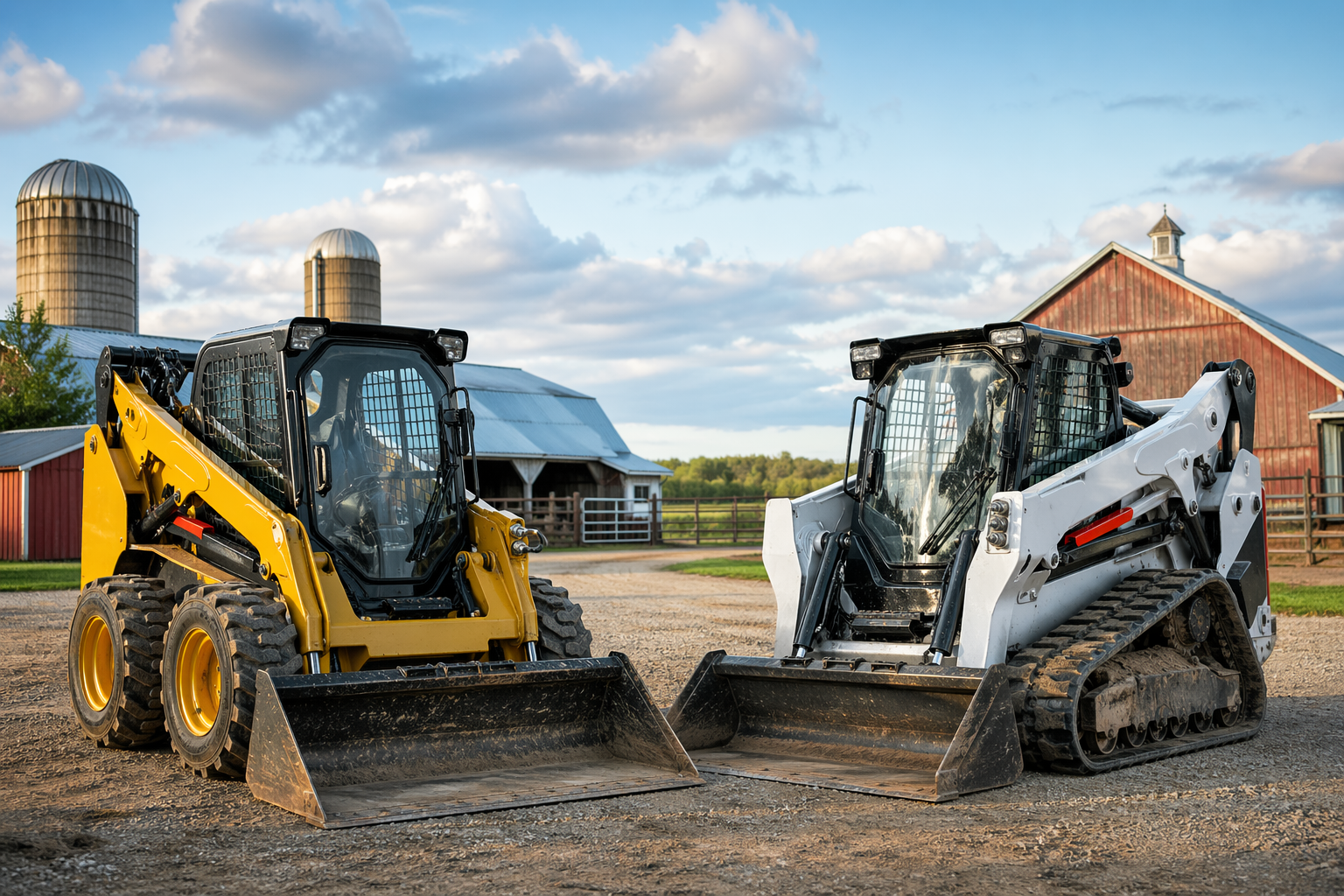
The biggest difference is simple: a skid steer runs on wheels, while a compact track loader runs on tracks. That affects traction, flotation, ground pressure, maintenance, ride quality, and where each machine works best. Deere’s compact equipment guide specifically frames the choice around skid steer vs. CTL, along with lift design and machine size.
When a Skid Steer Usually Makes More Sense
A skid steer is often the better choice when you mostly work on:
- packed yards
- gravel
- concrete
- firm surfaces
- snow-cleared farm lanes
- indoor or tighter working spaces
Wheeled machines are often attractive for farms that want lower upfront cost, easier movement on hard surfaces, and a practical machine for daily general-purpose chores. Industry guidance also commonly points to skid steers as the more cost-effective option for paved or firmer ground.
When a Compact Track Loader Usually Makes More Sense
A compact track loader is often the stronger option when you regularly deal with:
- mud
- soft ground
- uneven terrain
- loose material
- wet conditions
- sites where extra traction matters
Because tracks spread machine weight more evenly, CTLs usually perform better where a wheeled machine may lose traction or leave deeper marks. Deere also promotes compact track loaders for versatile work involving material moving, root rakes, rotary cutters, grapples, forks, and other demanding attachments.
The Attachments That Matter Most on a Farm
Attachments are what turn a skid steer from a loader into a true multi-purpose farm machine. Bobcat, Caterpillar, and John Deere all highlight broad attachment ecosystems as a core advantage of skid steers and compact loaders.
1. Bucket
The basic bucket is still one of the most-used attachments for daily farm work. It is useful for moving manure, soil, gravel, feed, and snow.
2. Pallet Forks
Pallet forks are one of the best starter attachments for farms. Cat specifically highlights pallet forks as a strong agriculture attachment for transporting heavy loads such as feed or harvested materials.
3. Grapple
A grapple helps with brush, silage, loose debris, branches, and irregular material that a standard bucket does not handle as well.
4. Bale Spear or Bale Hugger
These are especially useful for livestock farms that regularly move and stack hay bales. Deere specifically mentions bale huggers and bale spears among compact loader attachment options for farm chores.
5. Rotary Cutter or Brush Cutter
For overgrown areas, ditches, shelterbelts, or rough vegetation, a cutter attachment can make one machine useful beyond feeding and loading work. Deere says its rotary cutter attachments for skid steers and CTLs are built for clearing medium to heavy brush and hardwoods up to 10 inches in diameter.
6. Broom or Snow Attachment
For Canadian conditions, snow and cleanup attachments can add major value. Deere’s broom attachments and Caterpillar’s skid steer attachment lineup both include options suited to cleanup and snow-related work.
What to Compare Before Buying
Not every skid steer is the right fit for every farm. Before choosing a model, it helps to compare machines based on the kind of work you actually do most often.
Rated Operating Capacity
This affects how much the machine can safely handle in regular use. If you work with heavy pallets, bale handling, or denser materials, this becomes one of the most important specs.
Lift Path
Some buyers compare radial lift and vertical lift depending on whether they want stronger digging performance or better reach and lift height for loading trucks and stacking materials. Deere’s compact construction equipment guide specifically tells buyers to choose between vertical or radial lift depending on application.
Hydraulic Capability
If you plan to run demanding attachments, hydraulic performance matters. Not every attachment requires the same flow, and higher-demand tools may narrow your machine options.
Operator Comfort
Visibility, controls, cab layout, and ease of entry matter more than many buyers expect, especially during long winter cleanup days or repetitive feeding work.
Dealer Support and Parts
Attachments and machines are only useful if parts and service are available when you need them. Major manufacturers consistently position dealer support and parts coverage as part of the ownership value.
Skid Steer Buying Tips for Canadian Farms
Canadian conditions make a few buying questions especially important:
- Will you use the machine year-round or mainly in warmer months?
- Is your yard usually firm, frozen, muddy, or mixed?
- Do you need a snow-focused machine in winter?
- Are you planning to run one main attachment or several?
- Will the machine be used in barns, feedlots, open yard space, or all of the above?
A farm that mostly works on hard-packed surfaces may be very well served by a skid steer. A farm dealing with wetter ground or soft terrain for long parts of the season may find a compact track loader more practical.
Why Reviews and Real-World Feedback Matter
Specifications tell only part of the story. On paper, several skid steers may look similar. In real ownership, buyers also care about visibility, comfort, reliability, cold-weather starting, hydraulic response, service access, and how well a machine performs with common farm attachments.
That is where owner feedback becomes valuable. Real-world impressions can help identify the machines that perform well not only in brochures, but in everyday farm conditions across Canada.
Final Thoughts
A skid steer remains one of the most useful all-around machines for farms that need versatility, maneuverability, and strong attachment support. If most of your work happens on firm ground, around buildings, in yards, or in tighter spaces, a wheeled skid steer may be the more practical choice. If traction and soft-ground performance are bigger priorities, a compact track loader may be worth the added cost.
The best way to narrow your options is to compare models by capacity, lift design, attachment compatibility, and real owner experience. A machine that looks good on a spec sheet is only part of the answer. The better choice is the one that fits your farm’s daily workload, seasons, and long-term maintenance expectations.
Skid Steer FAQ
Is a skid steer good for farm use?
Yes. A skid steer can handle feeding, cleanup, loading, pallet work, snow removal, and general yard maintenance. Its value depends heavily on the attachments you plan to use.
What is the difference between a skid steer and a compact track loader?
A skid steer uses wheels, while a compact track loader uses tracks. Skid steers are often preferred on firm surfaces, while CTLs are often better on soft or uneven ground.
What are the most useful skid steer attachments for a farm?
Common high-value attachments include a bucket, pallet forks, grapple, bale spear or bale hugger, brush cutter, and snow or broom attachment.
Are skid steer attachments universal?
Many attachments are widely compatible across brands, but compatibility still depends on the coupler system, hydraulic requirements, and machine specifications. Deere notes that many of its compact construction attachments are also compatible with competitive machines.
