
Owning a small acreage in Canada comes with more work than many new property owners expect. From mowing and grading to snow removal, hauling materials, and seasonal cleanup, even a modest piece of land can require the right equipment to stay manageable. The challenge is that many buyers are not sure what machine to purchase first.
Some owners immediately start looking at horsepower numbers. Others focus on price alone. In reality, the best first equipment purchase depends on the size of the property, the type of work you do most often, and whether you want one versatile machine or several specialized tools.
This guide explains which types of farm and property equipment make the most sense for Canadian acreage owners, what to prioritize first, and how to avoid spending money on the wrong machine too early.
Why equipment choice matters on a Canadian acreage
In Canada, equipment has to handle more than summer maintenance. Many acreage owners need machines that can work across very different seasons. A property setup that feels fine in July may become frustrating in January when snow piles up, driveways freeze, and cold starts become part of daily life.
That is why the smartest equipment purchases are usually the ones that solve multiple problems. A machine that can move soil, clear snow, handle pallets, pull attachments, and help with landscaping usually gives better value than one that performs only a single seasonal task.
Start with your most common jobs
Before buying any equipment, make a list of the tasks you do most often. This matters more than buying the biggest machine your budget allows.
Typical acreage jobs in Canada include:
- mowing grass and rough areas
- clearing snow from driveways and yards
- moving gravel, dirt, mulch, or firewood
- grading lanes or driveways
- lifting pallets, seed, or feed
- digging fence post holes
- maintaining trails or shelterbelts
- cleaning around outbuildings and corrals
The more of these jobs your machine can handle, the more useful it becomes throughout the year.
The compact tractor is often the best first purchase
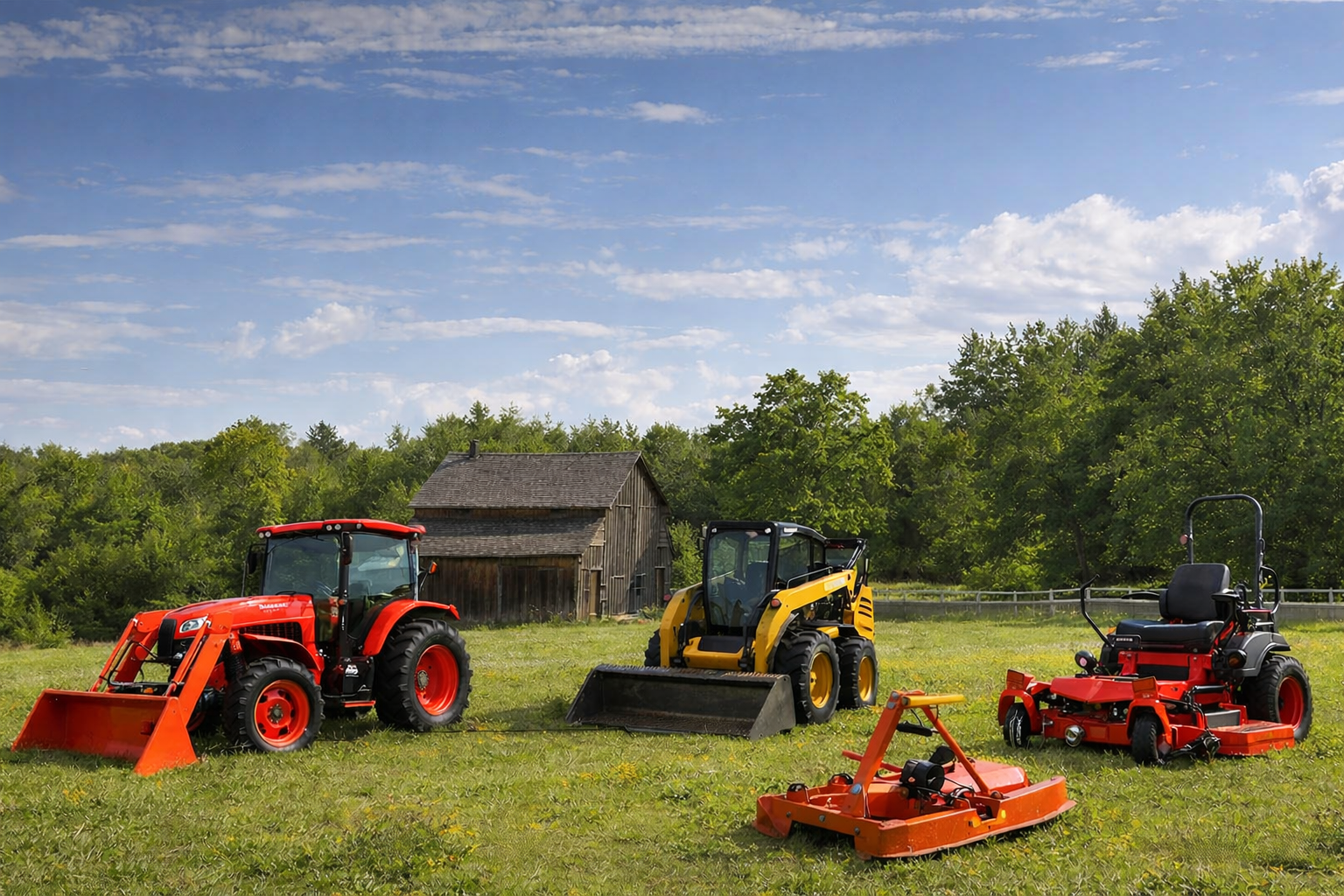
For many Canadian acreage owners, a compact tractor is the most practical place to start. It offers a strong balance of versatility, attachment compatibility, and year-round usefulness.
A compact tractor can often handle:
- front loader work
- mowing
- snow removal
- light grading
- tilling
- post-hole digging
- material transport
This makes it a strong option for buyers who want one machine that can cover a wide range of property tasks. It is especially useful for acreages where the owner needs flexibility more than raw lifting power.
Compact tractors also work well when paired with common attachments such as rear blades, box blades, rotary cutters, snow blowers, pallet forks, and tillers. That flexibility is one of the main reasons they remain a top choice for small farms and rural properties across Canada.
When a skid steer makes more sense
A skid steer can be a better first machine if your acreage work is heavily focused on material handling, loader work, landscaping, or frequent attachment changes. These machines are extremely capable in tight spaces and can be very productive around yards, barns, shops, and construction-style projects.
A skid steer is often a better fit when your main jobs include:
- moving dirt or gravel regularly
- clearing and levelling areas
- operating buckets, forks, augers, or grapples
- working in tighter spaces
- doing frequent loader-intensive tasks
The trade-off is that a skid steer may not replace a tractor for PTO-based work or broader acreage versatility. For many small property owners, it becomes the right choice only if loader work is the top priority.
Zero-turn mowers are excellent, but not always the first machine to buy
A zero-turn mower is one of the best tools for fast mowing on a well-maintained property. It saves time, leaves a clean finish, and is easy to use around open areas with landscaping and obstacles.
However, it is usually not the first equipment purchase unless mowing is by far your biggest job. That is because a zero-turn is highly specialized. It does mowing very well, but it will not move snow, lift materials, grade a driveway, or help with most utility work.
For owners who already have a tractor or skid steer, a zero-turn can be a great second or third purchase. For a first machine, most acreage owners are better served by something more versatile.
Do not underestimate attachments
Attachments often determine whether a machine becomes truly useful or only occasionally helpful. A properly equipped tractor or skid steer can replace several separate tools and save a lot of labour over time.
Some of the most valuable acreage attachments in Canada include:
- front loaders
- pallet forks
- rear blades
- box blades
- rotary cutters
- snow blowers
- grapples
- augers
Many buyers focus so much on the base machine that they forget the attachment plan. A smaller, well-equipped machine can often deliver more practical value than a larger machine with no useful tools attached.
Think about winter before you buy
Canadian buyers should never treat winter work as an afterthought. If you have a long driveway, a rural lane, or frequent snowfall, snow removal can quickly become one of the most important reasons to own equipment in the first place.
Before buying, think about:
- whether you need a cab
- how often you deal with blowing snow
- whether traction will be an issue
- if you need a front or rear snow setup
- how comfortable the machine will be in freezing temperatures
A machine that looks good for summer landscaping but struggles in winter may not be the right long-term choice for your property.
New or used equipment?
For many first-time acreage owners, used equipment is appealing because it lowers the entry cost. That can be a smart approach when buying from a trusted source and when the machine has a good service history, reasonable hours, and no major signs of abuse.
New equipment, on the other hand, may offer better warranty support, financing options, newer features, and less uncertainty. Buyers who plan to keep the machine for years often appreciate the peace of mind that comes with a new purchase.
The best choice depends on budget, availability, and how much risk you are comfortable taking on.
Common buying mistakes to avoid
A lot of acreage owners make the same early mistakes when buying equipment. Avoiding them can save both money and frustration.
Buying too much machine
Larger equipment is not always better. If the machine is too big for your buildings, gates, storage space, or typical tasks, it becomes inconvenient instead of useful.
Buying only for one task
A machine chosen for one narrow job may leave you needing a second major purchase sooner than expected.
Ignoring attachments
The base machine is only part of the equation. The right attachment setup often matters just as much.
Underestimating winter use
Snow removal, traction, and cold-weather comfort should be part of the buying decision from the start.
Focusing only on price
The cheapest option is not always the best value if it cannot handle the work you need done.
What should most acreage owners buy first?
For many small acreage owners in Canada, the best first purchase is usually a compact tractor with a loader. It offers the broadest range of uses and can grow with the property over time as you add attachments.
That said, there are clear exceptions:
- choose a skid steer first if loader work and material handling dominate your workload
- choose a zero-turn mower first if mowing is easily the main job and you already have other ways to handle snow and utility work
- choose based on attachments and year-round tasks, not just engine size or appearance
The right answer depends on how you actually use your land.
Final thoughts
There is no single perfect machine for every acreage in Canada. The best equipment is the one that matches your property, your climate, and your daily reality. Buyers who start with practical needs instead of brochure numbers usually make better long-term decisions.
For many owners, that means starting with a versatile machine that can mow, lift, clear, grade, and adapt through the seasons. Once those core needs are covered, it becomes much easier to decide whether the next step should be a dedicated mower, a more specialized loader machine, or another attachment that expands what you can do on the property.
If you are researching farm equipment in Canada, Aglist helps you compare machines by category, brand, specifications, and real owner feedback, making it easier to narrow down the right fit before you buy.
