Overview & Specs
GSI 1218 Portable Grain Dryer (1200 Series) — Specs That Matter + Reviews That Decide
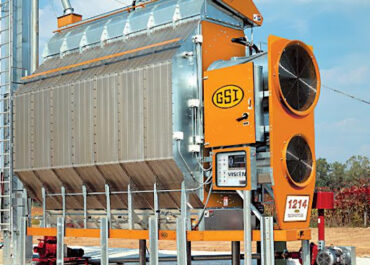
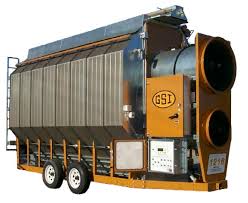
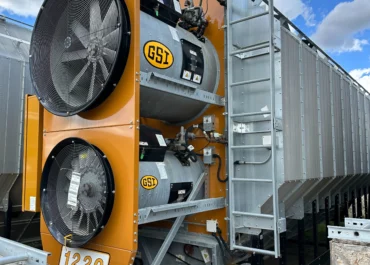
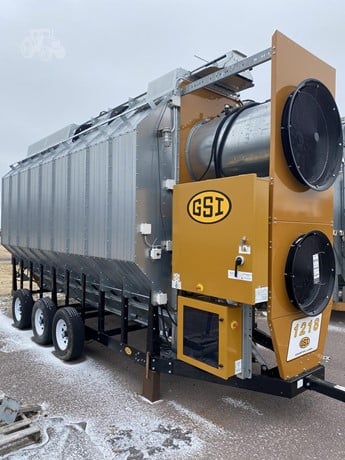
The GSI 1218 is a portable, continuous-flow dryer from the GSI 1200 Series—often chosen by farms that want a capable dryer without jumping into a larger multi-module setup. It’s built as a single module with two fans and two heaters (two plenums), which gives flexibility in how you run harvest drying day to day.
On Aglist, the goal isn’t to drown you in numbers—it’s to combine published performance with what buyers actually search for: real-world reviews, operator notes, and “what it’s like to run one” during Canadian harvest pressure.
On This Page
ToggleWhere the 1218 fits in the 1200 Series lineup
GSI positions the 1200 Series for small to medium farms that want flexibility in drying options and the ability to operate in multiple modes (All Heat, Dry & Cool, continuous flow, or batch). The series is not expandable, so the model choice should match your realistic harvest pace.
Published drying rates for the GSI 1218 (GSI reference)
Dry & Cool performance (published)
- 25% → 15%: 320 BPH
- 20% → 15%: 510 BPH
Full Heat performance (published)
- 30% → 15%: 410 BPH
- 25% → 15%: 520 BPH
- 20% → 15%: 840 BPH
These are published at 5-point removal, which makes it easier to compare models consistently across the same series.
Capacity inside the dryer (why yard flow can feel smoother)
H3: Grain columns and holding capacity
- Grain columns: 14” × 18’ long
- Total holding capacity: 490 BU
- Grain column holding capacity: 423 BU
That internal capacity can be useful when trucks arrive in waves or when your transfer to bins becomes the real bottleneck—reviews often mention this “flow feel” more clearly than any spec sheet.
Grain movement hardware (loading, unloading, metering)
Loading (top auger)
- 8” top auger — 5 HP
- Rated auger capacity: 3,800 BPH
Unloading (bottom auger)
- 8” flight / 10” tube — 5 HP
Metering and max capacity (mechanical potential)
- Meter roll drive: VFD, 1 HP
- Maximum capacity: 2,520 BPH
Heat and airflow package (the “site planning” section)
Heater capacities (max)
- Top heater: 1 × 4.5 million BTU/hr
- Bottom heater: 1 × 3.0 million BTU/hr
Fans
- Top fan (1-phase): 1 × 15 HP, 36”
- Bottom fan (1-phase): 1 × 10 HP, 28”
- Top fan (3-phase): 1 × 15 HP, 36”
- Bottom fan (3-phase): 1 × 10 HP, 28”
Power reference (so you don’t buy a dryer your yard can’t support)
Published electrical reference for the 1218 includes:
- Single phase, 230V (min/max amps): 177/232
- Three phase, 208V (min/max amps): 112/162
- Three phase, 230V (min/max amps): 104/153
- Three phase, 460V (min/max amps): 55/76
- Three phase, 575V (min/max amps): 49/66
Transport footprint and installed size (portable means predictable placement)
- Transport length (hitch to discharge auger): 27’2”
- Transport width: 8’
- Transport height: 13’5” (11’9”)
- Approx. transport weight: 9,000 lbs
- Installed length: 25’2”
- Installed height (excluding foundation supports): 14’6”
Reviews on Aglist — the part most buyers actually trust
For equipment like grain dryers, buyers usually search “reviews” first because specs don’t show the real story. The most helpful reviews for a GSI 1218 typically mention:
- crop type + moisture situation (rough range is enough)
- which drying approach they ran and why
- how consistent it felt when conditions changed overnight
- one clear advantage + one honest drawback
- a note about yard layout (bins, transfer, truck flow)
That’s the kind of feedback that helps the next buyer choose faster—and it’s exactly the content Google loves for long-tail searches.
GSI 1218 FAQ — Real-World Use, Setup & Reviews (Canada)
Who is the GSI 1218 a good match for?
The 1218 is typically chosen by farms that want a portable continuous-flow dryer with a straightforward setup and a footprint that’s easier to place in a busy yard. It often makes sense when you’re building a practical drying workflow without moving to a larger, more complex system.
What should I prioritize when comparing the 1218 to nearby models?
Use this order:
- Your harvest pace (how quickly grain arrives to the yard)
- Site realities (power availability + yard flow to bins)
- Reviews (how it behaves in changing conditions, ease of operation, maintenance routine)Specs narrow the shortlist; owner feedback usually decides.
What do reviews tell you that published specs can’t?
High-quality reviews often reveal:
- whether the unit feels consistent when outside temperatures swing overnight
- how much “hands-on attention” it needs during long harvest days
- whether cleanout and daily checks are easy or annoying
- how forgiving the dryer is when moisture varies load to loadThis is the kind of information buyers actually search for before committing.
Dry & Cool vs Full Heat — how do operators choose in practice?
Most decisions come down to storage plan and labour:
- If you want grain to be easier to manage for storage right away, operators often prefer a workflow where cooling is built into the process.
- If the main goal is pushing volume during short weather windows, farms often prioritize a faster drying workflow and plan cooling/logistics after.The right choice depends on your bins, your schedule, and how often you’re drying late into the night.
What are common site-planning mistakes with portable dryers like the 1218?
The most frequent issues are not “the dryer is bad,” but “the site setup fights the dryer”:
- bottleneck from dryer to bins (slow transfer makes the whole yard feel slow)
- awkward feeding angles or long grain moves that reduce smooth flow
- underestimating electrical readiness (service/panel/wiring run)
- fuel logistics not planned for peak harvest days
What should I inspect first on a used GSI 1218?
Start with the parts that typically cause downtime or bigger bills:
- stable heat operation (no erratic behaviour)
- fans: smooth startup, no unusual vibration/noise
- consistent metering (steady flow rather than surging)
- corrosion, patched panels, neglected cleanout areas
- whether the electrical setup will match your yard without expensive changes
What questions should I ask the seller before I drive to view it?
Ask for:
- how it was used each season and why they’re selling
- any maintenance notes or service history (even basic)
- any issues they had to “work around”
- a short video of startup and running operation
- what power/fuel setup it was connected to previouslyThis saves time and filters out risky units.
What makes an Aglist review “high value” for the 1218?
Encourage reviewers to include:
- crop type and typical moisture situation (rough info is enough)
- operating approach used and why
- one clear benefit and one honest drawback
- a quick note about yard setup (bins, transfer flow, truck timing)These details help buyers and create long-tail SEO for Canada.
What simple habits usually lead to a smoother drying season?
Owners who report fewer headaches often mention:
- quick daily checks (airflow path, moving parts, unusual sounds)
- consistent cleanout routine, especially when switching crops
- keeping small critical spares available during harvest
- writing down “known good” routines for common conditions
Why does Aglist emphasize reviews for grain dryers?
Because most people aren’t looking for a brochure—they’re looking for confidence. Reviews capture what matters on real farms: consistency, ease of operation, and how the unit fits into a Canadian harvest workflow.
GSI 1218 Reviews & Ratings
Share your experience
Help other Canadian buyers — leave a quick review for the
GSI 1218
There are no reviews yet. Be the first one to write one.